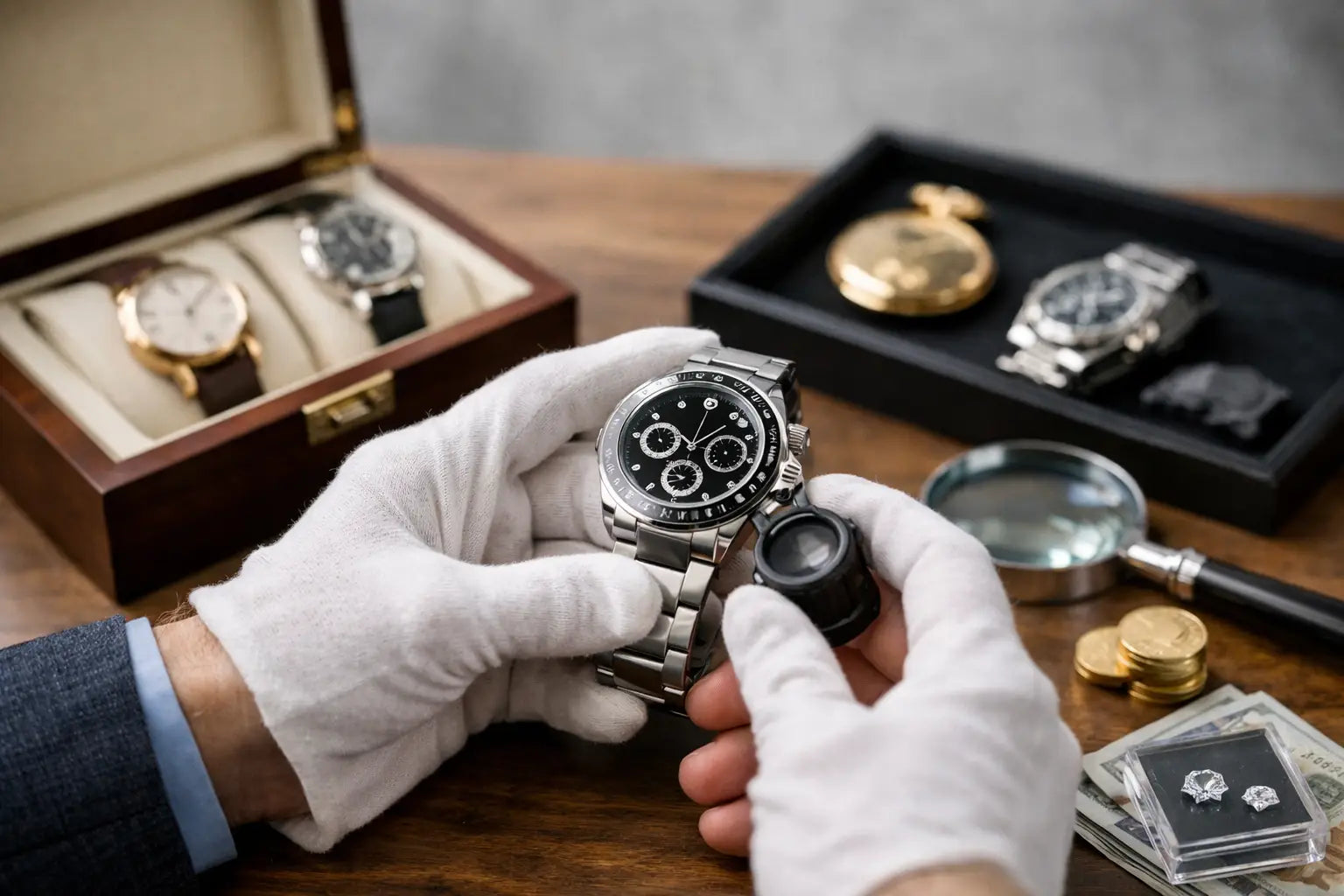
A watch can look expensive without being especially valuable, while a modest-looking vintage piece may be worth far more than its owner expects. The top signs a watch is valuable are usually found in the detail: the exact reference, its originality, its condition and whether buyers are actively looking for that particular watch.
Before accepting an offer, taking it to a high street dealer or listing it privately, establish what you have. A clear understanding of the factors below helps you set realistic expectations and avoid confusing retail prices with the amount a buyer will pay today.
A valuable watch is not always the most obvious one
Brand matters, but it is only the starting point. Rolex, Patek Philippe, Audemars Piguet, Omega and Tudor have strong secondary markets because they combine recognised names with collector demand. Yet value can also sit in a discontinued Seiko, a vintage Longines, an early Breitling or a well-specified micro-brand model that is no longer available.
Equally, not every watch from a prestigious manufacturer commands a premium. Some references were produced in high numbers, have limited demand or cost more to restore than the market will support. Value is the point where desirability, condition, authenticity and current market appetite meet.
Top signs a watch is valuable
The reference number identifies a sought-after model
The most useful detail on any watch is its reference number. It tells a specialist the precise model, case size, material, movement and production family. On many watches it appears between the lugs, on the caseback, inside the bracelet clasp or on warranty documentation.
Small differences in a reference can create a substantial difference in value. A steel Rolex Daytona, for example, sits in a very different market to a two-tone version. An Omega Speedmaster with a period-correct calibre and case can attract a stronger following than a later variation that looks similar at first glance.
Do not rely on the name printed on the dial alone. “Submariner”, “Seamaster” or “Carrera” covers decades of production and many different references. Clear photographs of the dial, caseback, bracelet, clasp, serial number and any paperwork give a buyer the information needed to value it accurately.
Original condition carries real weight
Condition is one of the biggest drivers of value, particularly for collectible and vintage watches. Light, honest wear is usually less of a concern than over-polishing, replaced parts or poorly executed repairs.
A sharp case with well-defined edges is generally more desirable than one that has been repeatedly polished until the original shape has softened. On older watches, an untouched dial with even ageing can be preferable to a freshly refinished dial, even if the latter appears cleaner. Collectors often call this originality, and it is not something that can be recreated convincingly once lost.
That does not mean a worn watch has no value. A scratched bracelet, faded bezel insert or tired strap can often be addressed. The important distinction is between normal use and changes that remove the watch’s correct period character. Never attempt a home restoration before seeking a valuation.
The dial, hands and bezel are correct for the watch
A valuable watch should be assessed as a whole. Dials, hands, bezels, crowns and bracelets are not simply cosmetic components: their correctness can materially affect the price.
On vintage pieces, matching luminous material on the dial and hands is a positive sign. On modern watches, a correct factory bracelet and clasp can make a meaningful difference compared with a replacement. Certain original dial colours, regional variants and rare configurations are particularly sought after, but they must be authenticated carefully.
Aftermarket diamonds, custom-painted dials and non-original bezels may appeal to an individual owner, but they commonly reduce collector value. In some cases, returning the watch to its original specification is possible, though the cost and availability of parts need to be considered before any work begins.
Box, papers and a clear history support the price
A watch can still be valuable without its box and papers. This is especially true for older watches, inherited pieces and models sold before full sets became a major selling point. However, the original warranty card or certificate, manuals, swing tags, spare links and purchase receipt can strengthen buyer confidence and improve resale prospects.
For a modern luxury watch, a complete set helps confirm reference details, purchase date and ownership trail. It can also make the watch easier to sell on later. Service records are useful for the same reason, particularly where they show work completed by the manufacturer or a respected independent watchmaker.
Provenance can add another layer. A documented military issue, a retailer-signed dial, an interesting original owner or a watch with an unusual delivery history may attract specialist interest. The documentation must be credible, though. A story without evidence should not be priced as proven provenance.
Demand matters as much as rarity
Rare does not automatically mean valuable. A watch may have been made in small numbers because very few people wanted it, and that can still be the case. The strongest values tend to sit where limited availability meets a genuine, established buyer base.
Current demand can move quickly. Steel sports watches from Rolex, Audemars Piguet and Patek Philippe have often commanded exceptional attention, but premiums vary by reference, dial, age and market conditions. Omega Speedmasters, Tudor Black Bays and selected Cartier models also have active followings, yet not every example trades at the same level.
Discontinued references can be particularly interesting when they have a feature absent from the current range, such as a smaller production run, a specific movement or a desirable dial. A professional buyer will compare recent market evidence rather than relying on an old auction result or an ambitious online listing.
The movement and materials justify closer inspection
Precious metal cases, complicated movements and high-quality mechanical calibres can all contribute to value. Gold and platinum watches have an underlying material value, while chronographs, perpetual calendars, minute repeaters and tourbillons may command more because of their complexity.
But complication alone is not a guarantee of a high sale price. Some complex watches are costly to maintain and appeal to a narrow market. Likewise, a gold case does not make a watch collectible if the model itself has little demand. The movement’s condition, originality and service requirements must be weighed against what buyers are prepared to pay.
A watch that runs well is encouraging, but accuracy on the wrist is not a complete mechanical assessment. Water resistance, amplitude, internal corrosion and worn components can only be properly judged during inspection.
A sensible service history protects value
Regular servicing shows that a watch has been cared for, especially if there are invoices describing the work. For modern watches, manufacturer service paperwork can be reassuring. For vintage pieces, it is often preferable to see evidence of sympathetic maintenance rather than a full replacement of aged components.
There is a trade-off here. A freshly serviced watch may be easier for a buyer to place, but an unnecessary service can replace original hands, dials or bezels that collectors value. If you are considering servicing purely to sell, ask for an appraisal first. The money spent does not always return pound for pound in the final offer.
What does not necessarily make a watch valuable
A large original retail price is not proof of a strong resale market. Nor are internet listings that have sat unsold for months. Retail prices include brand positioning, VAT, dealer overheads and warranties, while asking prices are simply aspirations until a watch actually sells.
Engravings can narrow the buyer pool, although they are not always fatal. Missing links on a bracelet, non-original straps and cosmetic wear are usually manageable, but should be disclosed. Most importantly, a watch must be authentic. Counterfeits, watches assembled from mismatched parts and altered examples require careful inspection and should never be valued from a single front-on photograph.
How to prepare for a proper valuation
Gather the watch, box, paperwork, spare links, service documents and any purchase information you have. Take clear photos in natural light, including the front, caseback, sides, clasp and reference or serial details where visible. Do not polish it aggressively, open the case or remove components.
Be honest about faults, modifications and previous repairs. A specialist can work with an imperfect watch; surprises discovered later are what delay a sale or change an offer. A good valuation should explain the key factors affecting the figure, whether that is strong market demand, missing documentation, condition or the cost of required work.
For owners who want a quick, insured and straightforward route to sale, Watch Nest can assess luxury, vintage and enthusiast watches with no obligation, then provide a market-led offer based on the specific watch rather than a generic price range.
The best next step is simple: preserve what is original, collect the evidence you have and let the exact reference and condition be assessed before deciding what to do. That is how a valuable watch receives the attention, and the price, it deserves.