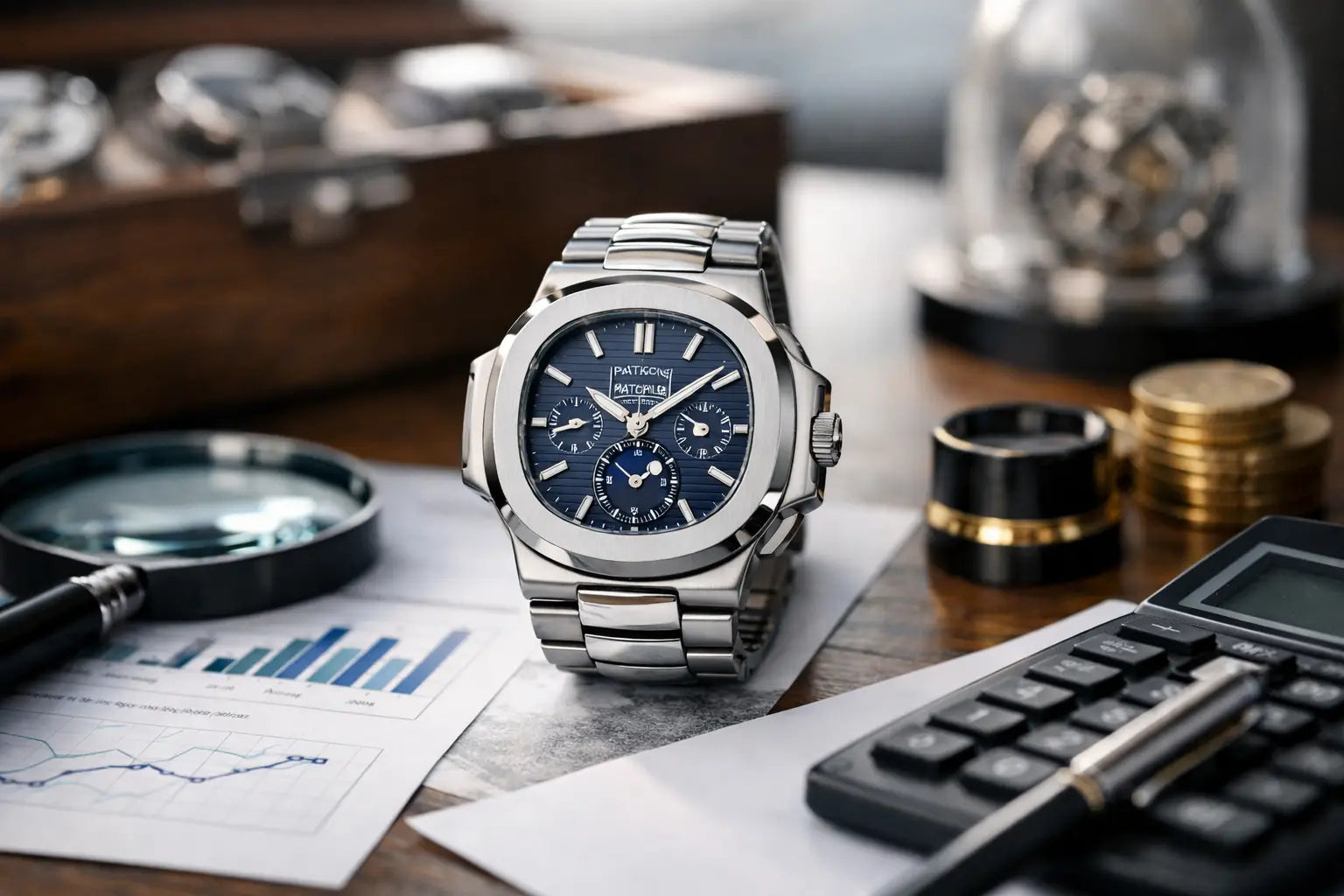
A valuation for Patek Philippe should never be based on a quick glance at an online asking price. Two watches that appear almost identical can carry very different values once the reference, dial, case condition, service history and completeness are properly assessed. For an owner looking to sell, the aim is simple: establish a realistic market value, then receive an offer that reflects what the watch can genuinely achieve in the current UK market.
Patek Philippe remains one of the most respected names in watchmaking, but that does not mean every model follows the same pricing pattern. A sought-after steel sports reference can attract exceptional demand, while a precious-metal dress watch may have a narrower buyer pool despite a higher original retail price. A professional assessment accounts for that difference before a price is discussed.
What affects a valuation for Patek Philippe?
The reference number is the starting point. It identifies the collection, case material, movement, production era and, often, the variation that collectors are looking for. Nautilus, Aquanaut, Calatrava, Golden Ellipse, Twenty~4, Gondolo and Grand Complications all trade differently. Within those families, a particular dial, bracelet, case size or discontinued configuration can materially change demand.
A stainless-steel Nautilus, for example, is not valued in the same way as a gold Calatrava. Strong public interest in a model may support its resale value, but an accurate figure still depends on the exact reference and its individual condition. The same applies to Aquanaut references, where original straps, clasp condition and dial variants can make a meaningful difference.
Condition is equally important. Buyers of Patek Philippe watches pay close attention to the case lines, bezel definition, dial originality and bracelet stretch. Heavy polishing can soften the sharp edges that define a case, particularly on vintage pieces and sports models. This does not automatically make a watch unsellable, but it can affect collector appeal and therefore the offer.
A clean, original dial is often more valuable than a cosmetically altered one. Refinished dials, replacement hands, non-original diamonds and aftermarket parts can limit the market, even where the watch looks attractive at first sight. On a complicated or vintage Patek Philippe, originality may matter more than a recent cosmetic refresh.
The value of box, papers and provenance
A Patek Philippe watch can be sold without its original box and papers, but a complete set usually gives a buyer greater confidence and can improve its value. The certificate of origin is particularly significant because it links the watch to its original sale details. Booklets, presentation boxes, spare links, setting pins and service documents also help build a clearer picture of ownership and care.
For vintage watches, provenance can be especially valuable. An extract, period-correct paperwork, documented servicing or a known ownership history may make a watch easier to place with the right buyer. That said, paperwork alone will not compensate for a poor or heavily altered watch. The watch itself remains the main consideration.
If you have inherited a Patek Philippe and cannot find every accessory, it is still worth seeking a valuation. Do not spend money replacing boxes or buying paperwork before speaking to a specialist. Those additions are not always appropriate, and they do not necessarily increase the net amount you receive.
Why online prices can be misleading
Many owners begin by searching their reference online. That can be useful for identifying the model, but it is a poor substitute for a selling valuation. The figures displayed on marketplaces are commonly dealer asking prices, not completed transactions. They may include a warranty provision, finance costs, platform fees, VAT considerations, stock-holding risk and room for negotiation.
A private seller also needs to consider what is left after fees, insured delivery, authentication concerns and the risk of a buyer dispute. A watch advertised at an ambitious price is not the same as cash received in your bank account.
Auction results can offer another point of reference, particularly for rare vintage pieces, but they require context. The published hammer price may not reflect the seller's final proceeds after commission, insurance, transport and other charges. Auctions also take time and do not guarantee that a watch will perform at its highest estimate on the day.
A direct specialist offer is therefore based on a different calculation. It reflects the watch's current wholesale and resale market, its likely saleability, preparation requirements and the level of risk assumed by the buyer. It should be clear, commercially realistic and free from hidden deductions.
How to prepare your Patek Philippe for valuation
You do not need to have your watch professionally cleaned or serviced before requesting a price. In fact, avoid polishing, repairing or replacing parts without advice, especially on an older Patek Philippe. Originality can be more valuable than an unnecessary intervention.
Take clear photographs of the dial, caseback, clasp, bracelet, buckle and any visible reference or serial details. Include the box, certificate, service receipts and spare links where available. Good images allow a specialist to give an informed initial indication, although a final offer may depend on an in-person inspection or detailed video review.
Be open about any issues. Mention timekeeping concerns, scratches, moisture damage, missing links, previous polishing, replacement parts or upcoming service requirements. This does not weaken your position. It avoids a valuation being based on incomplete information and helps ensure the final figure matches the initial expectation.
Direct sale or consignment: which suits your watch?
The right route depends on whether speed or maximum exposure matters more to you. A direct sale suits owners who want certainty, a straightforward process and payment without waiting for a retail buyer. Once the watch is inspected and agreed, the transaction can be completed quickly, with no marketplace listing and no buyer negotiations.
Consignment can be a sensible option for a rare, high-value or particularly collectible Patek Philippe where the right end buyer may justify a higher return. The trade-off is time. The watch needs to be marketed, shown to prospective buyers and sold before proceeds are released. There is no single best option for every reference.
Watch Nest can assess both routes with you, so you can compare immediate liquidity against the potential benefit of a longer retail sale. The useful question is not simply, “What is my watch worth?” It is, “What is the best net outcome for my timescale?”
What a fair Patek Philippe offer looks like
A fair offer should be supported by specific details, not broad claims that Patek Philippe is always rising in value. You should expect the buyer to identify the reference correctly, ask about condition and accessories, and explain whether the figure depends on physical inspection. For complicated, vintage or unusual pieces, further research may be required before a final valuation is confirmed.
Be cautious if a buyer gives an unusually high estimate without seeing photographs, reference details or paperwork. That figure may be designed to secure the watch first, only to be reduced later. Equally, a very low offer that relies on urgency is rarely the best route for a valuable timepiece.
Security matters alongside price. A professional sale should use fully insured transport or a secure in-person handover, clear identity checks and payment by bank transfer once the watch has been approved. For high-value Patek Philippe watches, discretion and a documented process are part of the value of dealing with a specialist.
Your Patek Philippe has a market position shaped by far more than its name on the dial. Gather what you have, leave the watch as it is, and obtain a valuation grounded in the exact reference and current demand. That is the clearest way to sell with confidence rather than guesswork.