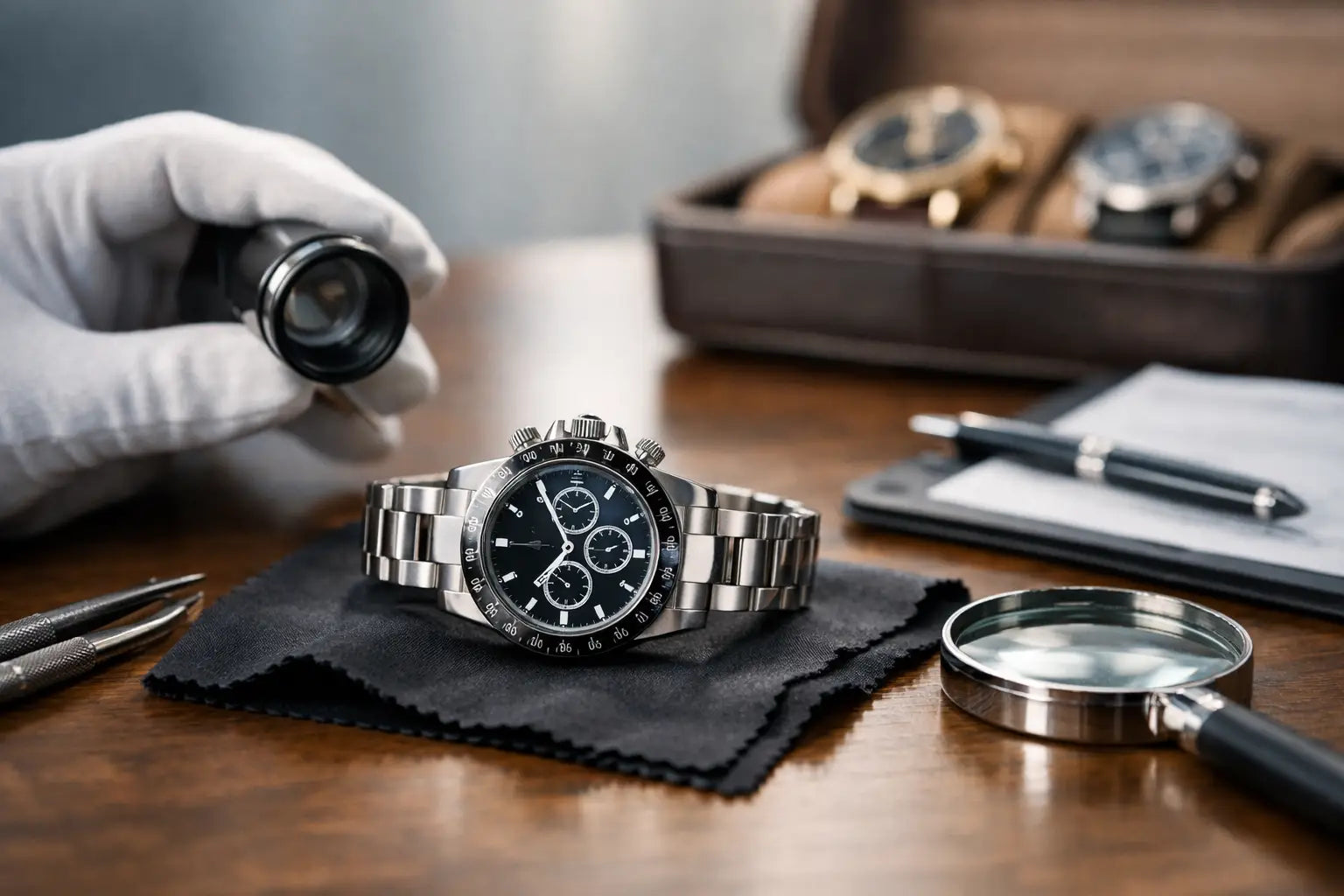
A watch valuation can move quickly from a rough estimate to a firm offer if the details are clear from the start. If you want to prepare your watch for valuation properly, the goal is simple - present the watch accurately, gather the right supporting items, and avoid anything that could create doubt about condition, originality or ownership.
That does not mean polishing it, servicing it unnecessarily, or trying to make it look newer than it is. In many cases, over-preparing a watch can work against you. Buyers want a clean, honest view of what they are assessing, especially with brands such as Rolex, Omega, Tudor, Cartier, Patek Philippe, Audemars Piguet and specialist vintage pieces where originality matters.
Why preparation affects your valuation
A serious buyer is not only looking at the watch itself. They are also assessing how complete the set is, how easy the watch will be to authenticate, how much post-purchase work it may need, and how strong demand is for that exact reference.
Good preparation reduces delays. If a buyer can quickly confirm the reference, serial, bracelet links, service history and overall condition, you are more likely to receive a fast and market-aligned offer. If key details are missing, the process often slows down while questions are answered, extra photographs are requested, or assumptions are made more cautiously.
This matters even more if you are comparing a direct sale with an auction or private listing. A specialist buyer is pricing for speed and certainty, so the cleaner the valuation file, the easier it is to put forward a strong offer without unnecessary risk margins.
Prepare watch for valuation with the full set
The first step is to gather everything that originally came with the watch, plus anything added later that supports its history. Box and papers still matter. For some modern watches, they can make a meaningful difference to saleability and price. For others, especially older vintage examples, they may be less critical than condition and originality, but they still help.
Try to collect the original presentation box, warranty card or certificate, instruction booklet, swing tags, spare bracelet links, purchase receipt, service paperwork and any records of previous appraisals. If the watch has been back to the manufacturer or an independent specialist, keep those invoices ready as well.
Do not worry if you no longer have everything. Plenty of watches sell strongly without a complete set. The important thing is to be clear about what is and is not included. A missing card is manageable. A vague answer about whether spare links exist is less helpful.
Service history can help, but only if it is relevant
Many sellers assume a fresh service automatically adds value. Sometimes it does. Sometimes it simply adds cost that you do not recover in full.
If the watch is running badly, has moisture issues, or clearly needs attention to be saleable, servicing may make sense. But if it is a modern piece in good running order, sending it in for an expensive manufacturer service just before sale is not always the best commercial move. Buyers often prefer to assess the watch as it stands.
What does help is documented service history. Proof of work, dates, parts replaced and the name of the watchmaker or brand service centre all give confidence.
Clean the watch carefully, not aggressively
Before you prepare your watch for valuation, give it a light clean so photographs and in-person inspection are straightforward. Use a soft microfibre cloth to remove fingerprints and surface dust. If the watch has a metal bracelet and confirmed water resistance, a gentle wipe around the clasp and links can help remove everyday dirt.
Do not use abrasive polish, jewellery cleaner or any product that could alter the finish. Sharp case edges, factory brushing and original surfaces matter, particularly on luxury sports watches and collectable vintage references. An over-polished case can reduce appeal rather than improve it.
The same rule applies to the crystal, bezel and dial. Leave specialist cleaning to a professional if the watch genuinely needs it. A valuation should be based on condition, not cosmetic guesswork.
Take clear photographs before sending details
If you are requesting an online or remote valuation, photographs do a lot of the heavy lifting. Poor images usually lead to cautious pricing. Clear, honest images help a buyer move faster.
Take photos in natural light if possible, against a plain background. Include the front of the watch, case sides, case back, clasp, bracelet, crown, and any accessories such as box, papers and spare links. If there is a visible reference number, serial area or hallmark on a precious metal watch, photograph that too where practical and safe.
Do not use heavy filters or edit out marks. Small scratches are normal. Hiding them wastes time because they will be found later during inspection. Better to show the watch accurately and receive a realistic indication from the outset.
What buyers are looking for in your photos
A buyer wants to judge overall condition, originality, completeness and wear. They are checking whether the dial, hands, bezel insert, bracelet stretch, clasp code, engraving and case shape all look consistent with the model and age.
This is particularly important for vintage Rolex, neo-vintage Omega, older Tudor Submariners, collectible Speedmasters and niche enthusiast watches where replacement parts or refinishing can affect the value significantly.
Be accurate about condition
When describing the watch, keep it factual. State whether it is running, whether the timekeeping seems normal, whether the date changes correctly, and whether any complications function as they should. Mention obvious wear, replaced parts you know about, and any damage such as chipped crystal, deep bracelet marks or moisture under the glass.
If you are not sure about something, say so. A straightforward "I do not know if the dial has been refinished" is better than a confident but incorrect claim. Buyers price risk. Clear honesty often protects your offer better than optimistic assumptions.
There is also a difference between wear and defects. Light desk marks on a modern Oyster bracelet are expected. A stretched bracelet on an older sports Rolex, a damaged ceramic bezel or a non-functioning chronograph is a different matter. Being precise saves time and builds trust.
Have ownership details ready
A proper valuation is not just about the watch. A legitimate buyer will also need comfort around provenance and ownership before proceeding to purchase.
If the watch was inherited, gifted or acquired some time ago, be ready to explain that briefly. You do not need a long story, just enough context to show that the watch is lawfully yours to sell. If you have proof of purchase, an insurance schedule, probate-related paperwork or old service invoices in your name or the family name, keep them accessible.
This is especially useful with high-value models where anti-fraud checks are stricter. Good paperwork can make the transaction smoother and faster.
Do not replace parts unless advised
One common mistake is fitting a non-original strap, aftermarket diamonds, a replacement bezel or unofficial accessories in the hope of increasing value. For most serious buyers, originality is more important than decoration.
Even with simpler changes, such as swapping a worn bracelet for a generic strap, it is better to disclose the original setup if you still have it. Factory components usually carry more value than aftermarket alternatives. On vintage watches, original though imperfect parts often matter more than newer service replacements.
If you are unsure whether to repair or replace anything before sale, ask first. The answer depends on the model, age, condition and likely selling route.
Prepare for questions on brand, model and reference
You do not need to be an expert, but basic watch details help. If you know the brand, model name, approximate year, case size, metal type and movement style, include them. If you can locate the reference number from papers or the case, even better.
This is where valuations become more precise. "Rolex Submariner" is helpful. "Rolex Submariner Date 126610LN, full set, purchased 2022" is far more useful. The same goes for an Omega Seamaster, Breitling Navitimer, Cartier Santos or Grand Seiko where multiple versions trade at different levels.
A specialist buyer such as Watch Nest can often identify the watch from photos alone, but accurate information from the seller still improves speed and certainty.
What not to do before a valuation
Trying too hard can cost you money. Avoid polishing the watch, opening the case back, using unverified watchmakers for quick fixes, or sending it away for an expensive service just because you think it looks better on paper.
Also avoid guessing a value based on the highest asking price you have seen online. Asking prices are not sold prices, and they do not account for fees, delays, return risk or authenticity disputes. A realistic valuation reflects the live market, condition, completeness and how the watch is actually likely to sell.
If you are weighing up direct sale versus consignment, preparation still matters, but the commercial decision changes. A direct purchase usually prioritises speed, certainty and immediate payment. Consignment may suit a rarer or higher-value piece where holding out for a stronger final price is worth the wait.
The best preparation is honest preparation
If you want the strongest chance of a fast, fair offer, focus on clarity rather than cosmetics. Gather the full set, photograph the watch properly, describe it accurately, and be open about condition and history. That gives a buyer what they need to assess the watch without padding in unnecessary caution.
A good valuation is not about presenting a perfect watch. It is about presenting the real watch, with the right information, so the offer reflects the market rather than the unknowns around it.