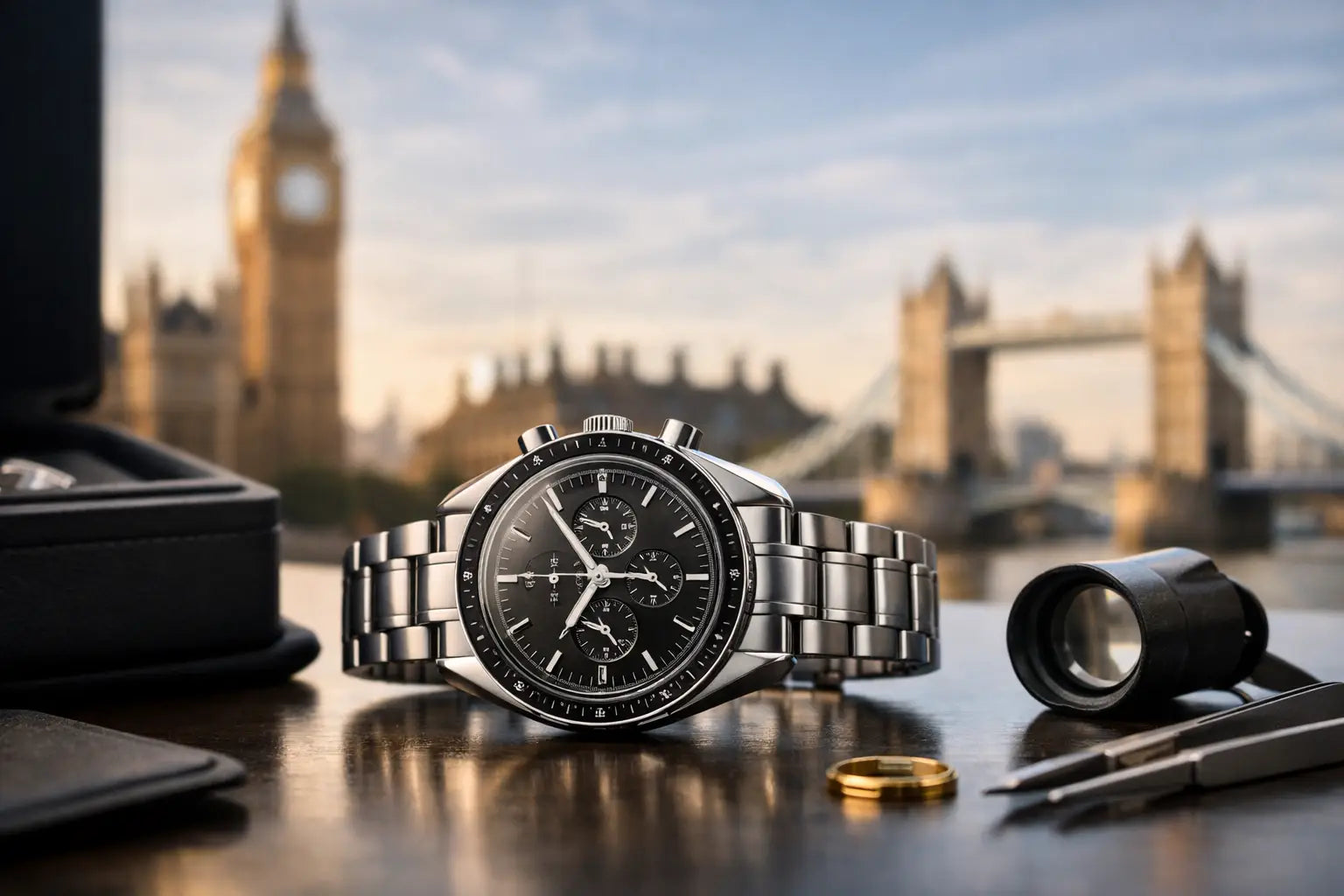
If you are asking where the best place to sell omega is, you are really asking two things at once - who will pay properly, and who will make the process feel safe. Those two do not always come together. A high headline price means very little if the buyer chips the offer later, delays payment, or leaves you exposed to disputes.
Omega is one of the strongest names in the pre-owned watch market, but values vary sharply by model, age, condition, service history and completeness. A Speedmaster Professional with box and papers is a different proposition from a worn Seamaster without documentation. Vintage Constellations, modern Aqua Terras, limited editions and precious metal references each attract different buyers, and the right sales route depends on what you own and how quickly you want to complete.
Where is the best place to sell Omega?
For most UK sellers, the best place to sell Omega is a specialist watch buyer rather than a general marketplace or auction. The reason is straightforward. A specialist can assess the watch properly, understands the model-specific market, and can usually complete the transaction quickly without charging seller fees.
That matters because Omega sits in an interesting part of the market. It is highly desirable, but it is also broad. Some references trade quickly and close to dealer-retail demand. Others are more price-sensitive and need realistic valuation. If your buyer lacks depth in Omega, you are more likely to get a generic offer based on rough averages rather than a proper appraisal.
A strong specialist buyer will look at the exact reference, dial variant, bracelet, year, movement, condition and provenance. They will also be clear about process - whether the watch is insured in transit, how payment is made, and whether the quote is obligation-free. That is usually where sellers get the best mix of price, speed and certainty.
The best place to sell Omega depends on your priority
There is no single route that suits every seller. If your priority is immediate payment, a direct watch buyer is often the strongest option. If your priority is squeezing out the last bit of value and you are prepared to wait, consignment may be worth considering. If your priority is maximum control, private sale might appeal, but it comes with more work and more risk.
That trade-off is where many sellers lose time. They start on a marketplace hoping for a top-end result, then deal with low offers, tyre-kickers and authenticity questions, before ending up with a dealer anyway. By that stage, the process has taken weeks and the final net figure may not be better once fees, negotiation and hassle are factored in.
Selling to a specialist watch buyer
This is the most efficient route for most Omega owners. A specialist buyer can price the watch against current market demand, inspect it quickly, and issue payment the same day or within 24 hours once approved.
The main advantage is certainty. You avoid listing fees, buyer disputes and endless messages. You also avoid the common marketplace problem where a buyer agrees a price, receives the watch, and then tries to renegotiate over minor wear or perceived issues.
The quality of the buyer matters, though. You want a business that buys across modern, vintage and enthusiast-led references, not one that only wants the easiest stock. If a buyer understands everything from a Moonwatch to a vintage pie-pan Constellation, that usually leads to a more accurate offer.
Selling through auction
Auction can work for rare, unusual or highly collectable Omega watches, especially pieces with exceptional provenance or scarcity. It can also suit sellers who are not in a rush and are comfortable with uncertainty.
The drawback is that auctions are not built for speed or guaranteed outcomes. Seller fees can reduce your net return, reserve strategy matters, and the final hammer price may land below expectations if the room or online bidding is quiet. For standard modern Omega models, auction is often less attractive than it first appears.
Selling privately
A private sale can sometimes achieve a stronger gross price, especially if you know the market well and can present the watch properly. But gross price is not net price.
You need to photograph the watch, field questions, prove authenticity, handle payment safely and manage the risk of fraud. For a valuable Omega, that is not a minor issue. Many private sellers underestimate how much time and caution is required, particularly when meeting strangers or shipping high-value items.
Selling to a pawnbroker or high street dealer
This is usually the quickest walk-in route, but often not the strongest on price. Generalist buyers may not fully value Omega references beyond broad brand recognition. That can be costly if your watch has a sought-after dial, bracelet, limited production detail or collector appeal.
Convenience has value, but if the offer is based on a rough resale margin rather than model-level expertise, the speed can come at an unnecessary discount.
What affects an Omega valuation?
Two Omega watches that look similar at first glance can have very different resale values. Reference number is the starting point, but the wider picture matters.
Condition remains one of the biggest factors. Light wear is normal, but over-polishing, bracelet stretch, damaged hands, replacement parts or poor refinishing can pull value down. Service history can help, although not every service adds value pound for pound. Buyers generally prefer documented work, especially if it was carried out by Omega or a respected independent specialist.
Box and papers usually improve saleability and often support a stronger offer. They matter most on newer and more expensive references, though a desirable vintage Omega can still sell well without them if the watch itself is right.
Market demand also shifts. The Speedmaster Professional remains one of the most recognisable and liquid Omega models. Seamaster Diver references are consistently popular, but values vary by generation and specification. Dressier lines such as De Ville or older Quartz models can be more selective. This is why broad statements about "what Omega watches are worth" often miss the mark.
How to tell if an offer is actually good
A serious offer should be clear, commercially sensible and backed by a transparent process. If the figure sounds strong but the buyer is vague about inspection, payment timing or shipping cover, you have not really been given certainty.
A good offer reflects current trade reality, not hopeful retail pricing. Many sellers compare a direct purchase quote to the highest asking price they can find online. That is the wrong benchmark. Asking prices are not sold prices, and they do not account for fees, delays, negotiation or the cost of carrying stock.
The more useful question is this: after all costs, delays and risk, what will you actually receive and when will it be in your account? That is the number that matters.
What the best selling process should look like
The best place to sell Omega should make the transaction easy from the first enquiry. You should be able to send basic details, receive a realistic initial valuation, and choose whether to sell in person or by insured post.
Once the watch is inspected, the final offer should be confirmed quickly without unnecessary back-and-forth. If accepted, payment should follow straight away by bank transfer. No hidden charges. No pressure. No vague timelines.
This is where specialist services stand apart from general marketplaces. The process is designed around secure transfer of a valuable asset, not around listing inventory and hoping the right buyer eventually appears.
For sellers outside London, postal selling should not mean taking extra risk. Fully insured shipping, clear tracking and proper communication are basic requirements, not extras. If a buyer cannot explain exactly how your Omega is protected in transit and during inspection, that is a warning sign.
When consignment makes more sense
If your Omega is particularly strong, unusual or fresh to market, consignment can be a smart middle ground. It gives you access to a dealer’s audience and sales process while aiming for a better return than an outright purchase.
It is not the right route if you need immediate funds. The sale still depends on finding the end buyer, and payment comes later. But for some sellers, especially those with desirable modern references or standout vintage pieces, the extra time can be worthwhile.
A specialist that offers both direct purchase and consignment is often in the best position to advise honestly. If they can explain the likely net outcome on both routes, you can make a decision based on speed versus upside rather than guesswork.
Choosing the best place to sell Omega with confidence
The best place to sell Omega is not the place that promises the highest number in the first message. It is the place that can justify its valuation, handle the watch securely, and pay quickly once agreed.
For most UK owners, that means using a specialist buyer with real experience in Omega across modern, vintage and enthusiast models. Watch Nest is built around that approach: fair market-aligned offers, insured transactions, no seller fees and fast payment without the usual friction of marketplaces or auctions.
If you are ready to sell, the smartest first step is simple. Get a professional valuation from a buyer who knows exactly what your Omega is, what the market is doing, and how to turn that into a clean, confident sale.