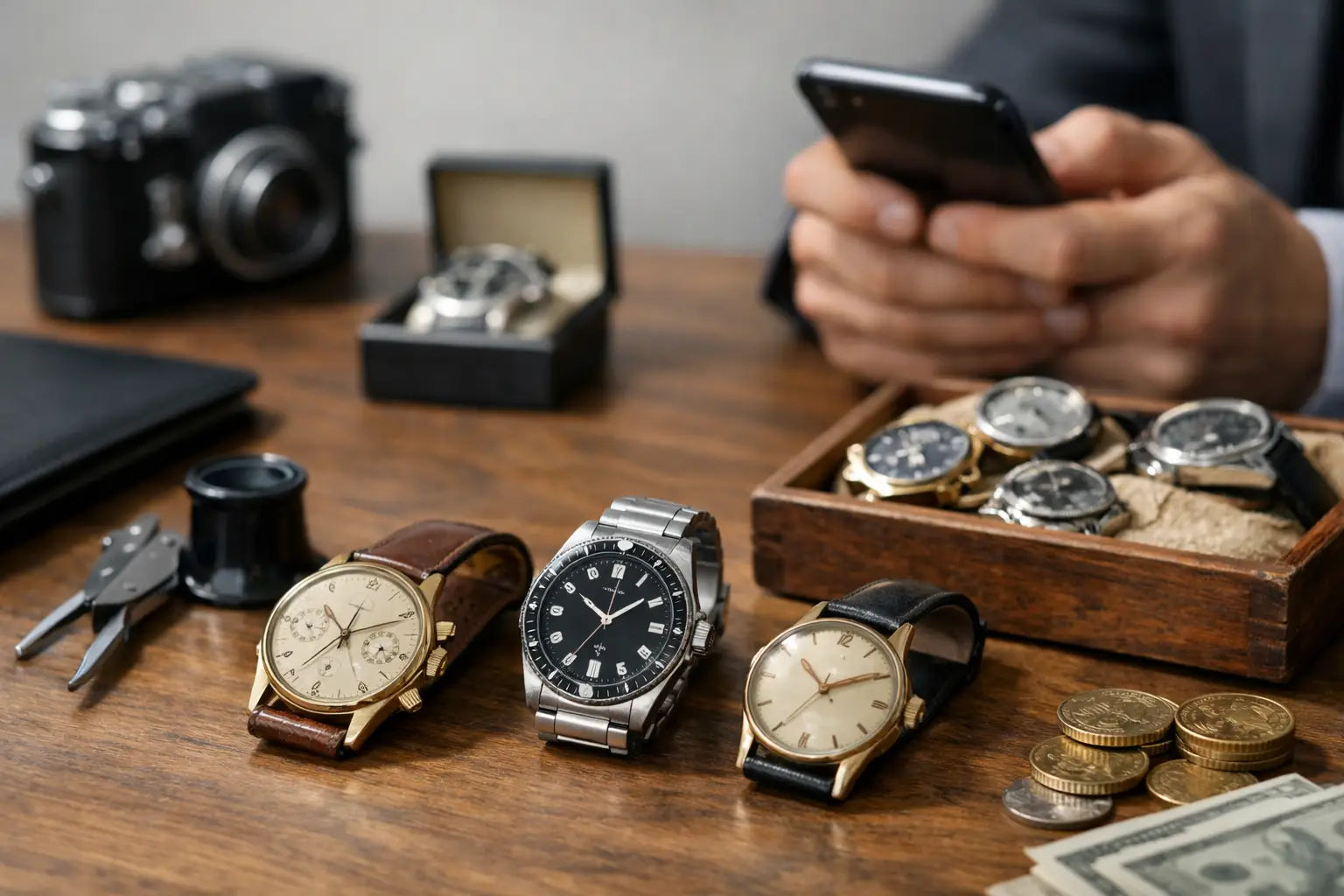
A 1960s Omega with a worn dial, a Rolex inherited from a relative, or a modest mechanical watch with its original box can all attract very different buyers. The best options for selling vintage watches depend on what you own, how quickly you need funds and how much responsibility you are prepared to take for the sale.
Vintage watches are not valued like new ones. Originality, condition, service history, dial variation and even the quality of the case can move the price materially. The right route should give you a fair view of those details while protecting you from low offers, avoidable fees and risky buyer disputes.
Best Options for Selling Vintage Watches in the UK
There is no single route that suits every vintage watch. A highly collectible Patek Philippe may deserve a different approach from a 1970s Tudor, an early Seiko diver or a gold dress watch without paperwork. Before choosing where to sell, be clear about your priority: speed, maximum potential return, privacy or a balance of all three.
Sell directly to a vintage watch specialist
For most owners, selling directly to a reputable specialist is the most straightforward option. A serious buyer can assess the watch, explain the factors affecting its value and make a clear offer without expecting you to photograph it professionally, field messages or negotiate with unknown buyers.
This route is particularly useful for inherited watches, pieces with uncertain service history and watches that need expert identification. Vintage references can be difficult to date accurately, and details such as an original bracelet, correct crown, unpolished case or rare dial can make a meaningful difference. A specialist should recognise those points rather than pricing the watch as a generic example.
The trade-off is simple: a direct buyer needs room to resell the watch, so the offer will usually be below the final retail price. In return, you receive certainty. There are no marketplace selling fees, no chargeback risk and no need to wait for a buyer to decide whether they are happy after delivery.
At Watch Nest, sellers can request a free, no-obligation valuation and choose to complete the sale online, by insured post or in person at the London showroom. Payment is made by instant bank transfer once the watch has been checked and agreed, making direct sale a strong choice when speed and security matter.
Sell on consignment
Consignment is often the better option when the watch is desirable, you are not under pressure to sell immediately and you want to target a higher final return. Instead of buying the watch outright, the specialist markets it to their own buyers and takes an agreed commission when it sells.
A good consignment arrangement gives you access to professional photography, specialist pricing, buyer screening and a trusted sales platform. That can be valuable for vintage watches where presentation and provenance are central to achieving the right price. A rare dial, original papers or a documented service can be properly explained rather than lost in a short private listing.
However, consignment requires patience. The watch may sell quickly, but there is no guaranteed timetable. Ask exactly how the commission works, whether there are insurance arrangements while the watch is held, how the asking price will be set and whether you must approve reductions. You should also know when payment will be released after the buyer has paid.
Use a specialist auction house
Auction can work well for genuinely rare, historically significant or highly sought-after watches. Competition between collectors can push the hammer price beyond a private-sale estimate, particularly when the watch has exceptional provenance, an unusual configuration or a reference that rarely comes to market.
The headline result is not the amount you take home. Seller's commission, catalogue charges, insurance, transport and other costs can reduce the net proceeds. There is also no certainty that the lot will reach its estimate, and auction schedules can mean waiting weeks or months before the sale takes place and funds are released.
Auction is best viewed as a strategic option, not an automatic route to the highest price. It is most effective when the watch has a strong story and enough collector demand to create genuine bidding interest. For a more common vintage Datejust, Seamaster or dress watch, a direct specialist sale may offer a better balance of net return and speed.
Sell privately through an online marketplace
Private marketplaces can deliver a strong gross price because you control the listing and negotiate directly with the buyer. For experienced collectors who know the exact reference, can assess offers confidently and are comfortable handling insured shipping or face-to-face meetings, this can be viable.
It is also the route with the most work and exposure. You must create an accurate listing, take detailed photographs, answer questions, deal with timewasters and manage payment safely. A buyer may challenge originality, condition or function after receiving the watch. Even an honest description can become a dispute if expectations have not been managed precisely.
Fees can also be substantial, particularly when payment processing and marketplace charges are included. Never send a valuable vintage watch before cleared funds are confirmed in your own bank account, and be cautious of buyers who insist on unusual payment methods, third-party collection or rushed arrangements. For many owners, the extra gross price is not enough to justify the risk and effort.
Consider a local jeweller or pawnbroker carefully
A high street jeweller or pawnbroker can be convenient if you need immediate cash, but it is rarely the strongest route for a vintage watch with collector appeal. Their offer may be based mainly on precious-metal content, brand recognition or a quick resale calculation rather than the details that enthusiasts value.
This does not mean every local buyer will underprice a watch. Some have real specialist knowledge. The question is whether they understand your particular piece. If you own a vintage chronograph, military-issued watch, uncommon Japanese model or early sports Rolex, obtain at least one specialist valuation before accepting a walk-in offer.
What Determines the Value of a Vintage Watch?
Age alone does not make a watch valuable. A 1950s watch in poor condition with replacement parts may be worth less than a later model that is original, desirable and properly documented. The market rewards the right combination of condition, rarity and collector demand.
Originality is often critical. Collectors generally prefer original dials, hands, bezels, crowns and bracelets, even where those parts show honest ageing. A dial that has developed an attractive natural patina can be more desirable than one that has been refinished. Conversely, an over-polished case can lose the sharp edges and proportions collectors want to see.
Condition still matters, but it must be judged correctly. Scratches and wear are expected on a watch that is several decades old. Water damage, corrosion, dial deterioration, incorrect replacement parts and movement problems are more significant. Service papers, original boxes, receipts and documented ownership can all strengthen confidence, though their absence does not prevent a sale.
Brand and reference remain important. Vintage Rolex, Omega, Tudor, Patek Philippe, Audemars Piguet, Cartier, Heuer and Jaeger-LeCoultre often have established collector markets, but enthusiast demand is not limited to famous names. Certain Seiko, Longines, Zenith, Universal Genève and British military watches can also command serious interest when correctly identified.
Prepare Your Watch Without Damaging Its Value
Start by gathering what you have: the watch, box, papers, spare links, service receipts, valuation documents and any history that explains where it came from. Take clear photographs of the dial, case back, bracelet, clasp and reference or serial markings where accessible. Do not open the case back yourself.
Avoid polishing, refinishing or replacing parts before receiving a professional opinion. Well-meaning restoration can reduce value if it removes original features. The same applies to fitting an aftermarket bracelet or having a dial cleaned. If the watch is not running, say so clearly. A non-running vintage watch can still be valuable, and an honest description leads to a more reliable valuation.
If you have an inherited watch, do not assume it is either worthless or priceless based on its appearance. Many important vintage pieces look modest at first glance, while a gold case does not always mean a high collector value. An expert assessment gives you a realistic starting point before you commit to any route.
Questions to Ask Before You Sell
A credible buyer should be comfortable answering direct questions. Ask whether the valuation is based on an inspection or photographs alone, whether there are any fees, how the watch is insured in transit and how quickly payment is made. If selling on consignment, ask about commission, the agreed minimum price and what happens if the watch does not sell.
You should also ask whether the buyer has considered the parts and features specific to your watch. A valuation that ignores originality, reference variation and condition is unlikely to reflect the true market. The best buyer will be clear about both the strengths and limitations of the piece rather than promising an unrealistic figure simply to secure it.
A vintage watch has already lasted decades. Take the extra time to choose a sale route that respects its details, protects your position and gives you a clear, fair outcome before it changes hands.