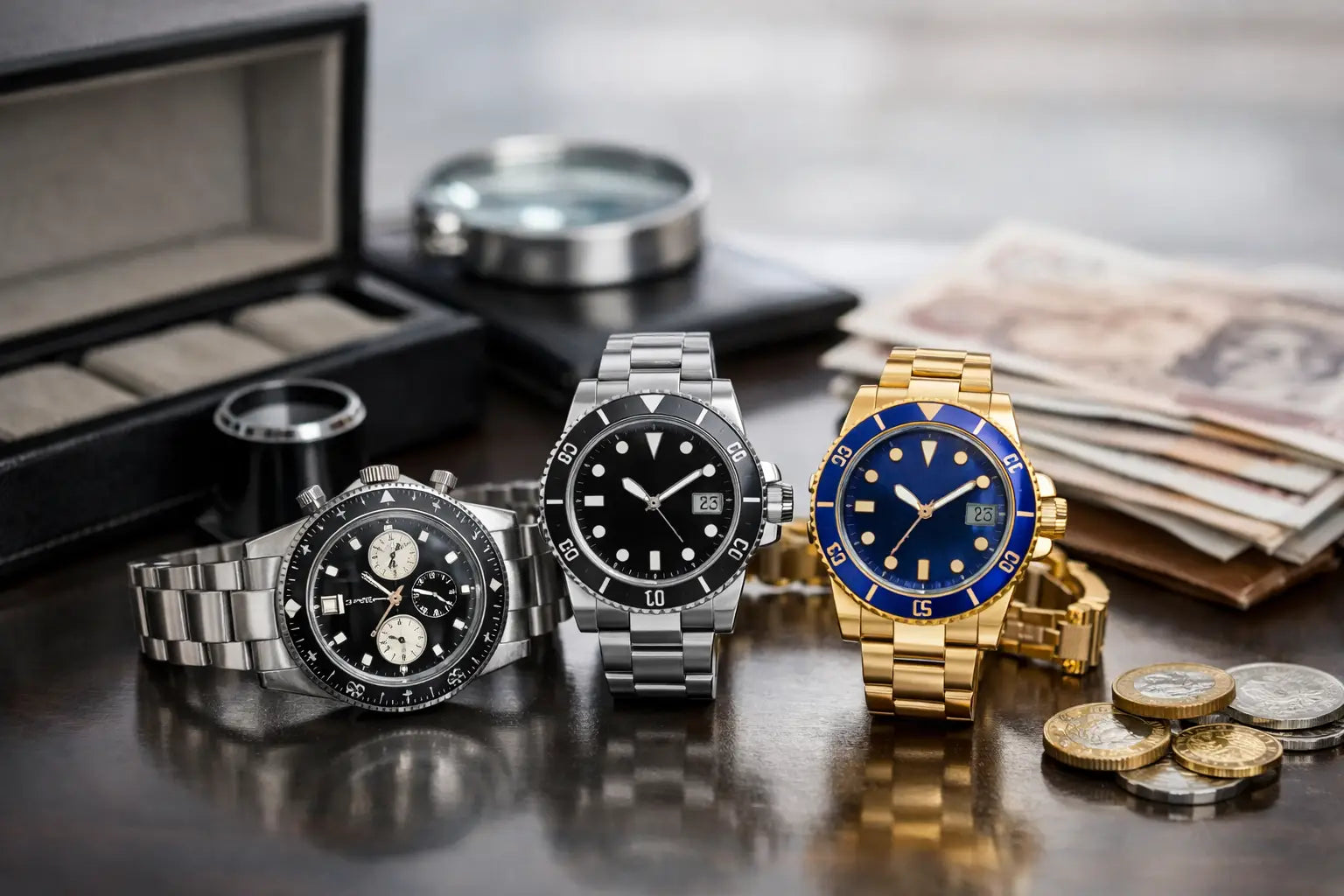
A watch can be prestigious, beautifully made and expensive at retail, yet still prove difficult to sell. The best brands for watch resale are those with consistent buyer demand, recognisable model lines and a healthy supply of comparable sales. Brand matters, but the exact reference, condition, provenance and current market appetite matter just as much.
For UK sellers, the practical question is not simply whether a watch is valuable. It is whether it can be sold quickly and securely at a price that reflects the market, without marketplace fees, speculative buyers or the risk of a dispute after payment. Here are the brands that generally offer the strongest resale prospects, and what to check before requesting a valuation.
The best brands for watch resale: the leading names
Rolex
Rolex remains the benchmark for resale liquidity. Models such as the Submariner, GMT-Master II, Daytona, Datejust and Explorer benefit from exceptional public recognition and a deep global buyer base. A well-presented steel sports Rolex will usually be among the easiest luxury watches to sell, particularly when supplied with its original box, papers, bracelet links and service history.
That does not mean every Rolex commands a premium. Condition, dial configuration, production year and reference number can materially affect an offer. A heavily polished case, stretched bracelet or replacement parts may reduce value, while discontinued references and sought-after dial variants can attract stronger demand. Gold and two-tone models can also perform differently from steel, so comparisons must be like for like.
Patek Philippe
Patek Philippe sits at the top end of the pre-owned market, particularly for complicated watches, classic Calatrava models, Nautilus references and Aquanaut sports watches. The brand's long-standing reputation for finishing, heritage and scarcity supports high residual values, but buyers are rightly exacting.
Originality is especially important with Patek Philippe. The correct paperwork, service records, original dial and an unaltered case can make a substantial difference. Vintage examples require specialist assessment rather than a quick comparison with a superficially similar online listing. A rare reference may be highly valuable, but a narrow buyer pool can mean that consignment is more suitable than a fast direct sale.
Audemars Piguet
Audemars Piguet is driven primarily by the Royal Oak. Steel Royal Oak models, Royal Oak Chronographs and selected Offshore references have established strong secondary-market demand, with values closely tied to reference, dial colour, case size and production period.
The Royal Oak's integrated bracelet is a major part of its appeal, which makes condition crucial. Missing links, excessive refinishing or damage to the distinctive bezel can affect resale more noticeably than on some conventional bracelet watches. Complete sets tend to be easier to place and achieve stronger offers, although a watch without papers can still be saleable when the reference and provenance are clear.
Omega
Omega offers one of the broadest and most dependable resale markets. The Speedmaster Professional is the standout, especially Moonwatch references with attractive vintage details, full sets or desirable calibres. Seamaster Diver 300M, Planet Ocean, Railmaster and select vintage Omega models also remain popular with collectors and everyday buyers.
Omega values are generally more accessible than Rolex values, but that should not be confused with weak resale. A clean, correctly specified Speedmaster can be very liquid. The key is understanding the model's position in the range. Limited editions, precious-metal pieces and older references may appeal strongly to enthusiasts, while standard modern variants can be more sensitive to condition and retail discounting.
Tudor
Tudor has earned a loyal following through watches such as the Black Bay, Pelagos, Ranger and chronograph range. The Black Bay Fifty-Eight and Black Bay Chrono are particularly familiar to buyers, while the Pelagos attracts those looking for a serious modern tool watch.
Tudor is often a sensible resale brand because demand is broad and the watches are recognisable. However, it is important to set realistic expectations. Many current-production models are readily available at retail, so resale value may depend heavily on purchase price, age and whether the watch has been worn hard. A fair market valuation should reflect what comparable examples actually change hands for, not an optimistic advertised price.
Strong resale is not limited to five brands
The best resale opportunities are not restricted to the most obvious names. Cartier has a strong and growing market for Tank, Santos and Panthère models, with certain vintage and precious-metal pieces performing particularly well. Vacheron Constantin, especially Overseas references, has an established collector audience. Jaeger-LeCoultre Reverso models, IWC Pilot's Watches, Panerai Luminor references and select Breitling Navitimer pieces can also sell well when correctly priced.
There is also a serious market for vintage watches, independent makers and enthusiast brands. Grand Seiko, Zenith, Nomos, Oris and selected micro brands may not offer Rolex-level liquidity, but the right model can be very desirable. The important point is that resale demand is model-specific. A specialist buyer should assess the watch itself rather than dismiss it because it is outside a short list of headline brands.
What actually drives a watch's resale value?
Brand creates the starting point. The final offer is shaped by the details that determine how confidently a buyer can resell the watch and how much demand exists for that exact example.
Condition is usually the first consideration. Light wear is expected on a pre-owned watch, but deep case marks, chipped crystals, moisture damage, worn bracelets and poorly executed polishing can reduce value. On vintage pieces, honest wear may be preferable to over-restoration. An original dial, hands and bezel can be more desirable than replacements, even if they show age.
Completeness also matters. The original box, warranty card, instruction booklets, tags, spare links and service papers support confidence and can improve the price. Do not assume a missing box or papers makes a watch unsellable, though. Many older watches were separated from their paperwork years ago. A professional appraisal can still establish authenticity, condition and market position.
Reference number, dial, bracelet and movement variation can be equally significant. Two watches that look nearly identical can differ sharply in resale value because of a discontinued reference, a rare dial or a more desirable production period. This is why a valuation based on photographs, serial details and supporting documents is more reliable than a generic online price estimate.
Direct sale or consignment: which route suits your watch?
A direct sale is usually the right choice when speed, certainty and simplicity matter most. You receive an offer, agree the sale and are paid without waiting for a private buyer. This avoids the practical problems of online marketplaces: seller fees, time-wasters, chargeback concerns, insured shipping disputes and buyers attempting to renegotiate after inspection.
Consignment can be worth considering for high-value, rare or slow-to-source watches where securing the maximum possible sale price matters more than immediate payment. The trade-off is time. A specialist needs to market the watch, qualify buyers and complete the transaction, so the sale is not guaranteed to happen on a fixed date.
At Watch Nest, sellers can choose the route that fits their priorities, whether that means a fast direct purchase or a managed consignment sale for a more specialist piece. In either case, the valuation should be clear about the watch's condition, current demand and the realistic price available in the market.
How to prepare your watch for valuation
Presenting a watch properly does not mean polishing it or carrying out unnecessary work. In fact, amateur cleaning and unapproved repairs can cause more harm than good. Keep the watch as it is, gather everything that belongs with it and provide clear information about its history.
Take photographs of the dial, caseback, clasp, bracelet, any visible reference numbers, box and paperwork. Mention servicing, replacement parts, faults and damage honestly. Transparency helps a buyer give a more accurate first offer and prevents delays when the watch is inspected.
Avoid relying on the highest asking price you see online. Listings may remain unsold for months, may not include fees, or may bear little resemblance to your watch's condition and completeness. The useful comparison is an achievable sale price for a comparable example, less the cost and risk of selling it yourself.
The strongest resale brand is ultimately the one buyers want in the condition you own it. Get a proper valuation, keep expectations market-led and choose a selling route that gives you the right balance of price, speed and security.