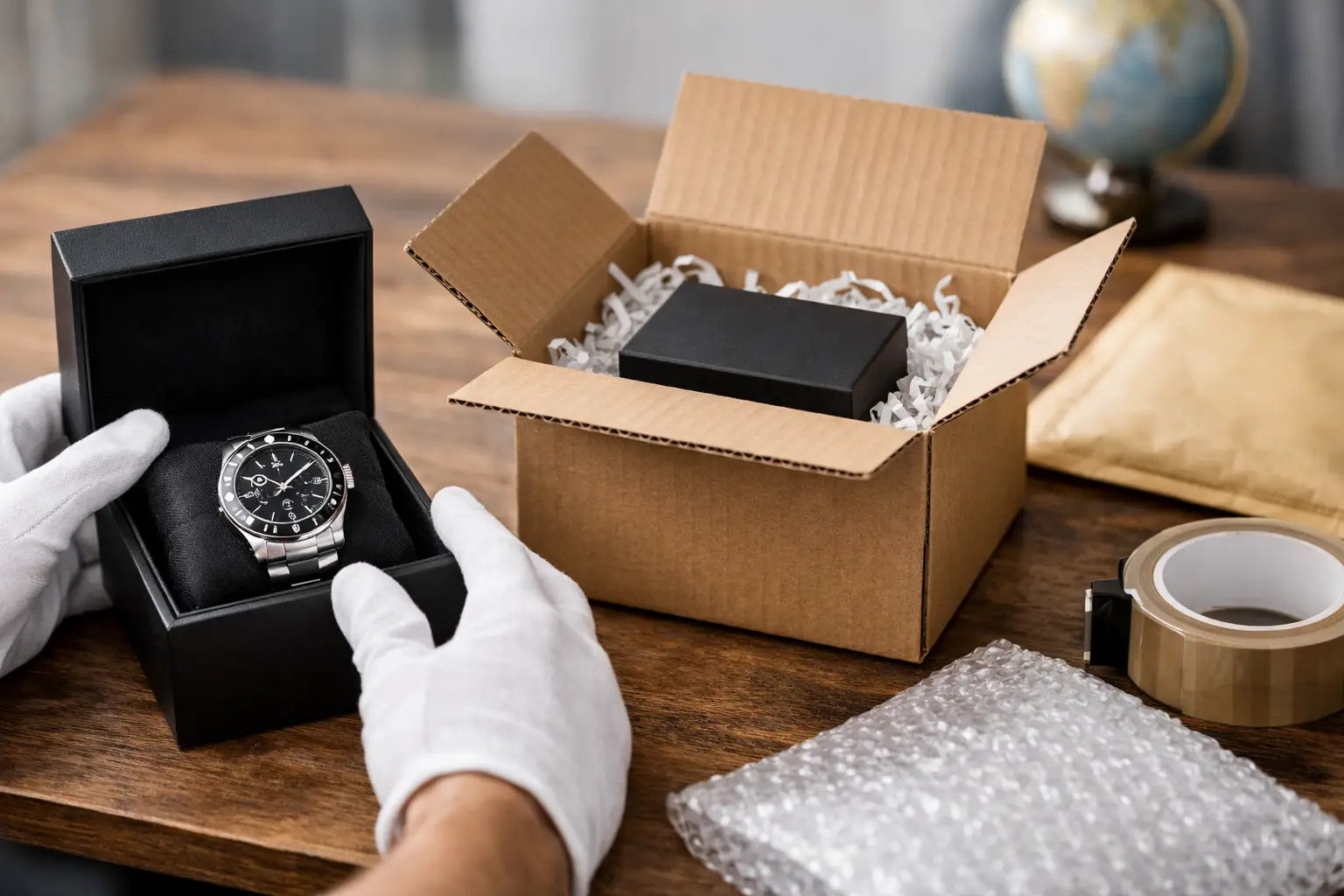
A valuable watch should never be dropped into a padded envelope and sent on its way. Whether you are selling a Rolex Submariner, a vintage Omega Seamaster or an inherited collection piece, the way you package a watch for insured shipping affects both its safety in transit and the strength of any insurance claim should something go wrong.
A properly insured postal service is only one part of the process. The other is making sure the watch is packed securely, the declared value is accurate, and you retain the evidence needed to show its condition before collection. Small mistakes, such as leaving a bracelet loose in a box or using packaging that advertises its contents, can create unnecessary risk.
Why packaging matters as much as insurance
Insurance is designed to protect against loss or damage under the carrier's terms. It does not make poor packaging acceptable. If a watch can move freely inside its box, if the parcel is inadequately sealed, or if its value has not been declared correctly, a claim may be delayed or refused.
Luxury watches are compact but not indestructible. A heavy steel bracelet can mark a case during transit. A loose buckle can scratch a polished clasp. Vintage acrylic crystals, delicate dials and older bracelets may be particularly vulnerable. Even a modern watch in its original presentation box needs additional protection, as retail packaging is made for display rather than the repeated impacts of a courier network.
For sellers, good preparation also protects the agreed valuation. A buyer will assess the watch received, not the condition it was in before it left your home. Clear records and careful packing remove uncertainty for everyone involved.
How to package a watch for insured shipping
Start by removing the watch from its display box, if you have one. Take clear, well-lit photographs of the dial, case, bracelet or strap, clasp, serial number where appropriate, and any existing marks. Photograph the accessories separately too, including the box, papers, spare links and warranty card. These images create a useful condition record before the parcel is sealed.
Set the watch flat and secure the bracelet or strap so it cannot swing against the case. A soft watch pouch is ideal, but clean microfibre cloth can also be used. Do not wrap the watch directly in adhesive tape, and avoid materials that could leave residue on leather straps, polished metal or vintage finishes.
Once protected, place the watch inside a small, firm inner box. The aim is simple: it should not be able to move when the box is gently shaken. Use enough cushioning material to fill gaps, but do not force the crown, pushers or bracelet under pressure. Bubble wrap can be effective when used around the inner box, rather than tightly around the watch itself.
Put that inner box into a larger, plain outer carton with further cushioning on every side. This double-box method gives the parcel protection against knocks, compression and drops. A strong cardboard box in good condition is essential. Reused packaging is acceptable only if it is clean, dry, rigid and free from weakened corners, old labels or tears.
Seal every opening with quality parcel tape. Apply tape across the central seam and around the edges of the box where needed. Avoid string, decorative wrapping paper or branded outer packaging that may draw attention to a valuable item.
Keep the parcel discreet
The outside of the parcel should not reveal that it contains a luxury watch. Do not write brand names, model details, insurance values or phrases such as “valuable item” on the carton. Use the address details supplied by the buyer or shipping provider, and make sure your return address is correct.
If you are sending original boxes and papers, pack them separately within the same outer carton where practical. A watch rattling around inside a presentation box can be damaged, while a heavy box can damage the watch if both are not properly separated.
Check what your insured service actually covers
Not all insured delivery services treat watches in the same way. Before posting, check that wristwatches are an accepted item, that the service covers the full declared value, and that your destination and collection method meet the policy conditions.
The cheapest insured option is not necessarily suitable for a high-value timepiece. Some services apply low compensation limits, exclude jewellery and watches, or require specific proof of value. Others may cover the parcel only where it is handed over at a staffed location, collected through an approved arrangement, or sent using a tracked service with a signature on delivery.
The declared value should reflect the genuine replacement or agreed sale value, not a rough estimate chosen for convenience. Under-declaring may leave you out of pocket after a loss. Over-declaring without evidence can make a claim harder to support. Keep a copy of the valuation, sales correspondence or purchase documentation that supports the figure.
When a specialist buyer provides an insured postal kit or arranges collection, follow their instructions precisely. This can simplify the process because the packaging, carrier and cover have been selected for valuable watches. At Watch Nest, sellers can use an insured postal service as part of a straightforward selling process, avoiding the need to arrange a high-value shipment alone.
Do not post before recording the evidence
For a watch worth hundreds or thousands of pounds, evidence is not excessive caution. It is sensible protection. Keep your pre-posting photographs, a record of the watch's serial number, the agreed value and any message confirming the shipping instructions.
It is also worth photographing the packing process. Take one image of the protected watch in the inner box, another of the sealed outer parcel, and one showing the shipping label clearly. If the item is collected, retain the collection receipt and tracking reference. If you take it to a Post Office or carrier drop-off point, do not leave without proof that the parcel has entered the network.
For particularly valuable watches, consider recording a short video of the final packing and handover. This is not a substitute for a proper insured service, but it can help establish what was sent and how it was prepared if a dispute arises.
Common packaging mistakes to avoid
The most frequent error is relying on the original watch box alone. It may look substantial, but it is rarely designed to withstand a parcel being stacked beneath heavier consignments. A second outer box and impact protection are still necessary.
Another mistake is using too much loose fill. Packaging should prevent movement, not merely surround the item with material. If you can hear or feel the watch shifting, repack it before sending.
Sellers should also avoid combining several watches in one unseparated box. Each watch needs its own protective layer and compartment. Metal bracelets and clasps can quickly mark one another, and multiple items can make a claim more complicated if the parcel is damaged or lost.
Finally, do not assume a tracking number means full protection. Tracking confirms progress through the delivery network. Insurance is separate, and its terms, limits and exclusions still apply.
When collection is the better option
Insured post is convenient for sellers outside London or those who prefer not to travel. However, collection can be the better choice where the watch is exceptionally valuable, the parcel includes several pieces, or you do not have appropriate packaging at home.
A specialist collection removes the risk of choosing the wrong carrier service or incorrectly declaring the value. It can also be useful for estate representatives handling a collection with boxes, papers and multiple watches, where careful inventory and secure transport matter more than speed alone.
If you are uncertain whether post is suitable, ask the buyer before sending anything. A reputable watch specialist should be clear about how the watch will be insured, what you need to provide, and what happens from collection through to valuation and payment.
A well-packed parcel is not about making the box look impressive. It is about making sure the watch arrives exactly as it left you: protected, documented and ready for a fair assessment.