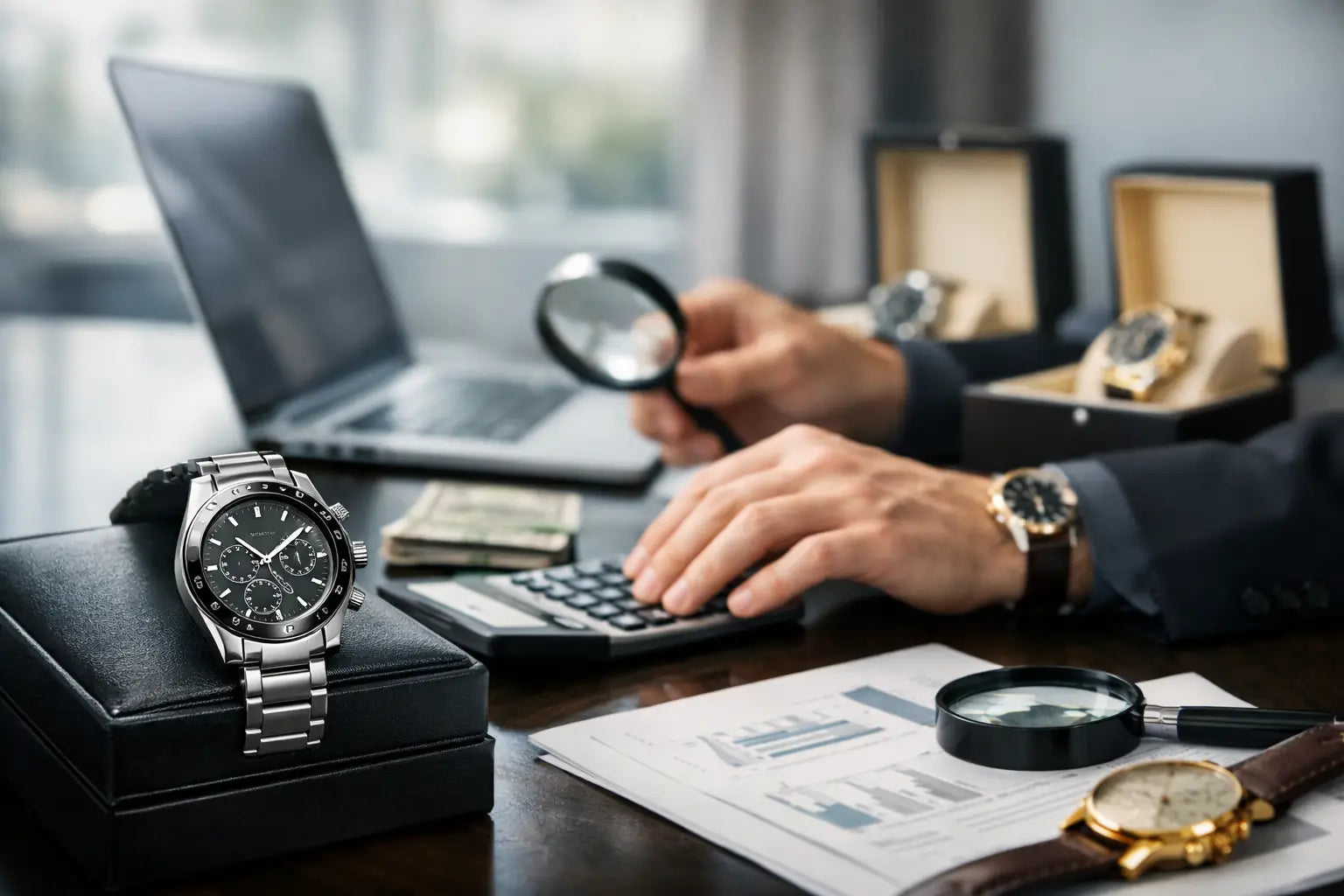
A watch can be worth materially different amounts depending on whether it is a current Rolex Submariner, a discontinued Omega Speedmaster, a 1990s Cartier, or an inherited gold dress watch with no paperwork. That is why following luxury watch resale trends matters before you accept an offer, list privately, or place a watch into auction. The market rewards the right combination of model, condition, provenance and timing - not simply the name on the dial.
For UK sellers, the practical question is not whether luxury watches retain value. Many do, but not all do equally, and prices can move quickly. The better question is: what is the market paying for this specific watch, in its present condition, with its particular set of accessories?
Luxury watch resale trends are becoming more selective
The broad rise in pre-owned watch values over recent years created a misleading idea that every luxury watch would appreciate. The reality is more measured. The strongest demand remains concentrated around recognisable, liquid references: stainless-steel Rolex sports models, selected Patek Philippe and Audemars Piguet pieces, desirable Tudor Black Bay references, and Omega icons such as the Speedmaster Professional and Seamaster Diver 300M.
However, buyers are now more selective about specification. A desirable reference in the right dial colour, bracelet configuration and production period can attract considerably more attention than a superficially similar version. A Rolex GMT-Master II may trade differently according to bezel, bracelet and full-set status. An Omega Speedmaster with an attractive dial, original bracelet and complete accessories can outperform a watch that is mechanically identical but heavily polished or incomplete.
This does not mean less famous brands have no resale market. Cartier, Breitling, IWC, Grand Seiko, Panerai and TAG Heuer all have active secondary markets, while well-regarded micro brands can appeal to enthusiasts. The difference is liquidity. A highly traded Rolex may generate immediate interest from several buyers; a niche or discontinued piece may require a more specialist valuation and a more patient route to sale.
Condition now affects the price more sharply
Condition has always mattered, but informed buyers have become far less forgiving of avoidable wear, poor refinishing and incomplete history. The market increasingly distinguishes between honest age and damage.
Light marks from normal wear are rarely a problem on a regularly worn modern watch. Deep dents, moisture damage, an incorrect replacement dial, stretched bracelets or poor aftermarket diamond work are different matters. Originality is particularly important for vintage watches. An unpolished vintage Rolex with an attractive original dial and matching components may command a stronger price than a cleaner-looking example that has lost much of its character through replacement parts or aggressive polishing.
Servicing is another area where sellers should avoid assumptions. A recent manufacturer or respected independent service can support a sale, especially if there is supporting documentation. But a service does not automatically add its full cost to the resale value. If the watch is running well and the market is strong, an unnecessary service may delay the sale without producing a matching uplift in price.
Before seeking valuations, take clear photographs of the dial, case, caseback, bracelet, clasp, serial or reference details where appropriate, and every item included with the watch. Honest presentation leads to a more accurate initial figure and reduces the chance of a revised offer later.
Boxes and papers remain valuable, but they are not everything
A full set - typically the original box, warranty card or papers, booklets, tags and spare links - is usually easier to sell and can achieve a higher price. This is especially true for current-production luxury sports watches and collectible references, where buyers expect completeness.
Yet a missing box or card does not make a watch unsellable. Many older watches were worn for decades before collectors treated packaging as an asset. Inherited pieces frequently arrive without their original accessories. A specialist buyer will assess the watch itself first: authenticity, reference, condition, originality, service needs and current demand.
The value of paperwork also depends on the model. For a modern, high-value Patek Philippe or Audemars Piguet, original papers can be a significant factor. For a mainstream watch with modest resale value, the difference may be less substantial. Sellers should provide everything they have, but should not assume an incomplete set has no market.
Price corrections have made realistic valuations essential
Some headline models experienced exceptional price growth during the peak of the pre-owned market, followed by visible corrections. That does not mean the market has collapsed. It means asking prices and achieved prices have moved closer together, and buyers are less willing to chase inflated listings.
This distinction is crucial when comparing valuations. An online advert is not proof of a completed sale. It may be priced optimistically, remain unsold for months, or include a dealer margin that a private seller cannot expect to receive. Auction results can also be misleading once seller charges, buyer premiums, transport and waiting time are considered.
A fair direct purchase offer reflects what a specialist can realistically pay after accounting for authentication, preparation, stock holding, market movement and resale costs. The strongest offer is not always the highest number quoted before inspection. It is the offer from a credible buyer that can verify the watch, explain the valuation and pay when promised.
Direct sale, private sale or consignment: the route changes the result
There is no single best way to sell every watch. The right choice depends on whether speed, certainty or maximum possible return matters most.
A private sale can sometimes produce a higher headline price, particularly for a sought-after model. It also exposes the seller to timewasters, fraudulent payment attempts, chargeback risk, platform fees, arguments over condition and the practical difficulty of handing over a valuable watch safely. For many owners, the additional return is not enough to justify the risk and effort.
Auction can suit unusual, historically important or genuinely collectible watches where competitive bidding may uncover a specialist buyer. It is less attractive when a seller needs a predictable figure quickly. Reserve decisions, catalogue deadlines, commissions and the possibility of a lot failing to sell all need consideration.
A direct specialist sale is usually the most straightforward route for owners who want fast, insured payment and a clean transaction. It is particularly suitable for modern luxury watches, collections, estate pieces and sellers who do not want to manage a private listing. Consignment can make sense for a rare watch where a longer sales period may justify the wait for a higher end buyer.
What is driving demand in the UK market?
UK demand continues to favour watches with strong brand recognition, versatile sizing and an established collector base. Steel sports watches remain highly liquid, but there is also sustained interest in smaller classic cases, precious-metal dress watches and vintage pieces with genuine originality.
The shift towards more considered buying has benefited watches with a clear story. That might be a first-generation Tudor Black Bay, a neo-vintage Rolex Datejust with an unusual dial, or a well-preserved 1960s Omega. Buyers want confidence that the watch is correctly described and sensibly priced. They are increasingly prepared to pay for quality, but less prepared to compromise on questionable parts or vague provenance.
Currency movements can affect UK resale values too. Many luxury watches are priced internationally, so changes in sterling can influence replacement costs and dealer buying appetite. New retail price increases from major brands may also support pre-owned demand, though they do not guarantee that every pre-owned reference will rise in value.
When should you sell a luxury watch?
Trying to identify the exact peak is rarely productive. If you no longer wear the watch, need to release funds, are settling an estate or want to reduce a collection, the most useful time to sell is when you can obtain a transparent market-aligned offer from a trusted buyer.
Avoid making decisions based solely on social-media hype or a single ambitious listing. Obtain more than one professional valuation, disclose any faults or missing items upfront, and ask how the figure will be confirmed. A serious buyer should be clear about inspection, insurance and payment timescales.
At Watch Nest, sellers can choose a secure online, postal or London showroom process, with a no-obligation valuation and fast payment once the watch is agreed. Whether you are selling a current luxury model, a vintage watch or an entire collection, a clear valuation gives you the confidence to act without guessing.