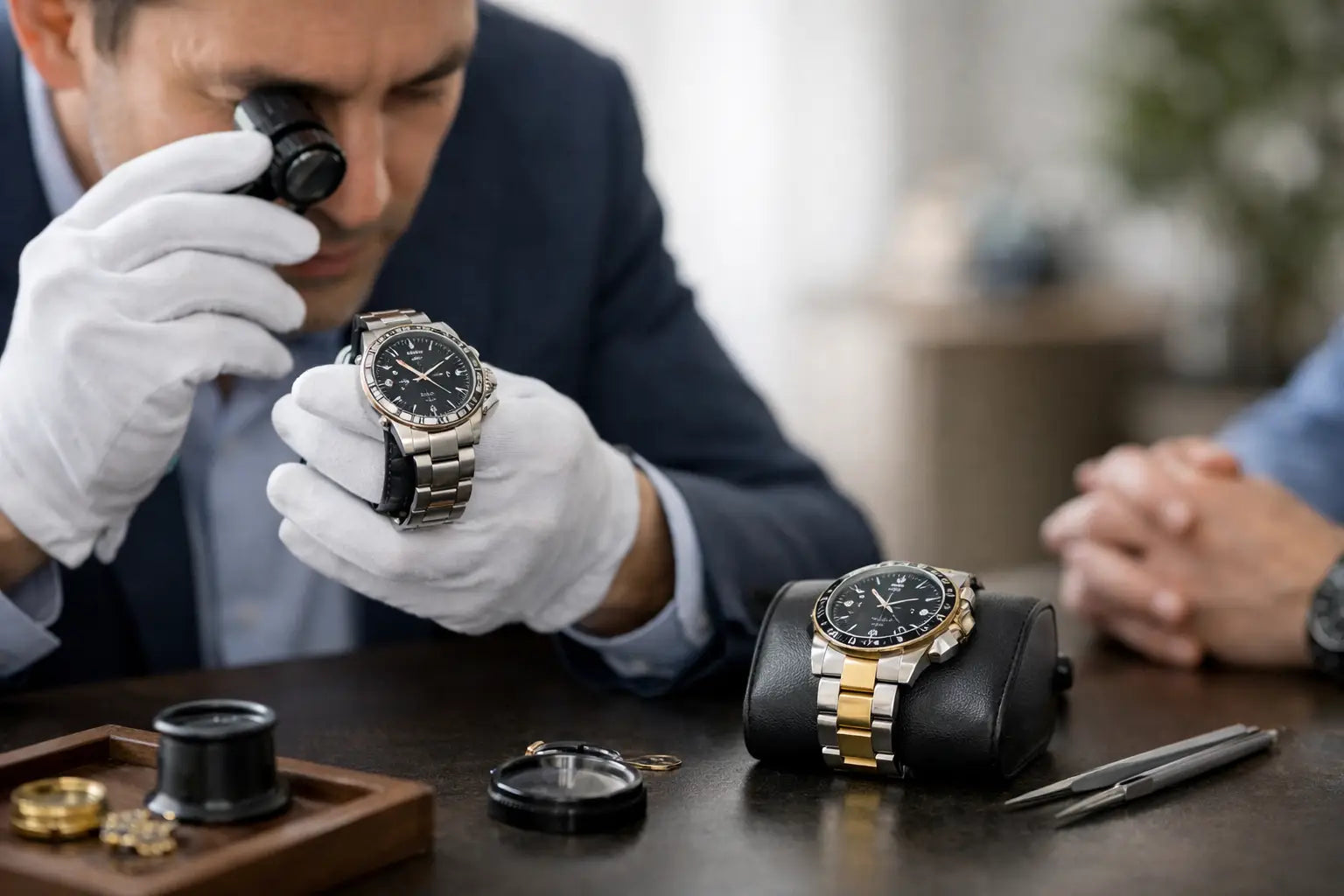
A watch that looks straightforward on the wrist can be surprisingly complex once a value is attached to it. That is why expert watch appraisal matters. Two watches with the same reference can produce very different offers depending on condition, originality, service history, market demand and even how complete the set is.
If you are planning to sell, the real question is not simply, what is my watch worth? It is, what is my watch worth in the current market, through the right selling route, and after all costs and risks are factored in? A proper appraisal answers that with far more accuracy than a quick online estimate or a guess based on asking prices.
What an expert watch appraisal actually involves
An expert watch appraisal is a professional assessment of your watch by someone who understands brand behaviour, model-specific demand, condition grading and real transaction values. It is not just a glance at the dial and a rough number.
The process usually starts with the fundamentals - brand, model, reference, age, materials and movement. After that, the detail matters. A Rolex Submariner with sharp case lines, original dial and full set will be viewed differently from the same reference with heavy polishing, replacement parts and no papers. The same applies across Omega, Tudor, Patek Philippe, Audemars Piguet and less obvious enthusiast brands.
A credible appraisal also looks at liquidity. Some watches are easy to sell quickly because demand is deep and consistent. Others may still be valuable but require a more specific buyer. That affects how a buyer prices risk, timescale and resale confidence.
Why online price checks only tell part of the story
Many sellers start by searching sold listings or marketplace adverts. That is understandable, but it often creates a false benchmark. Asking prices are not sale prices, and the spread can be significant.
Private sellers also tend to compare their watch to the highest example they can find online, without accounting for dealer warranty, servicing, presentation or reputation. A watch listed at a premium by a specialist retailer may include margin for overhead, preparation, returns risk and negotiation room. That does not mean a private seller should expect the same figure in hand.
An expert watch appraisal looks at what the watch can realistically achieve now, not what someone hopes to get eventually. That is a more useful number if your priority is a fast, secure sale without disputes or delays.
The factors that affect value most
Condition is usually the headline factor, but it is not the only one. Originality is critical, especially for vintage watches. A replacement bezel insert, relumed dial or service hands may be perfectly functional, yet still affect collector interest and value.
Completeness also matters. Box, papers, swing tags, original receipt, service records and spare links can all strengthen a watch’s position. For modern luxury references, a full set often supports stronger demand and a better offer. For older pieces, provenance and correct period parts can matter even more.
Then there is market timing. Some models trade consistently. Others rise and fall with fashion, supply changes or brand momentum. Steel sports watches from established names often behave differently from precious metal dress pieces, vintage chronographs or niche independents. An appraisal should reflect current buyer appetite, not last year’s peak.
Expert watch appraisal for vintage and inherited pieces
Vintage and inherited watches need a different level of care. Sellers often assume age alone guarantees high value. Sometimes it does. Often it does not. The market rewards specific references, original features and collectable configurations, not just age.
A 1960s Omega Seamaster, for example, can vary widely in value depending on dial condition, case metal, movement calibre, originality and whether the watch has been over-restored. The same principle applies to vintage Rolex, Longines, Heuer and Universal Genève. Small details change the commercial picture.
Inherited watches bring another issue - uncertainty. You may not know whether the watch has been serviced, altered or even assembled from mixed parts over time. That is where a specialist appraisal is particularly useful. It separates sentimental assumptions from market reality and gives you a clear, practical basis for your next step.
How buyers assess risk during an appraisal
When a professional buyer appraises a watch, they are not only pricing the watch itself. They are pricing the work and risk that come with it.
If the watch needs a service, has bracelet stretch, case damage, poor timekeeping or questionable parts, those issues affect what a buyer can pay. If paperwork is missing, they may need to work harder to reassure the next purchaser. If the model is slow-moving, capital may be tied up for longer. All of this sits behind the final figure.
That does not mean a lower offer is unfair. It means the appraisal is commercial rather than theoretical. A serious buyer should be able to explain where value sits, what reduces it and whether a direct purchase or consignment route makes more sense.
Direct sale or consignment - it depends on your priorities
One of the most useful outcomes of an expert watch appraisal is understanding the right selling route. Not every watch should be sold in the same way.
If speed, certainty and immediate payment matter most, a direct sale is often the strongest option. You receive a market-aligned offer, avoid seller fees, and remove the hassle of photographing, listing, negotiating and dealing with strangers. For many owners, especially those selling a single watch or an inherited asset, that convenience has real value.
If the watch is rare, highly desirable or likely to attract a premium retail buyer, consignment may deliver a stronger final return. The trade-off is time. You may wait longer for the right purchaser, and proceeds are not immediate. A good appraisal should be honest about that balance rather than pushing one route for every watch.
What to prepare before requesting an appraisal
You do not need to be an expert yourself, but a little preparation helps. Gather the watch, its box, papers, receipts, spare links and any service documentation. If you are requesting a valuation remotely, take clear photographs of the dial, case sides, caseback, bracelet, clasp and any accessories. Include close-ups of reference and serial details where possible.
It also helps to mention anything relevant up front. If the watch has been polished, repaired, serviced by the manufacturer or inherited without papers, say so. Accuracy saves time and produces a more dependable valuation.
Sellers sometimes hold back flaws in the hope of achieving a stronger quote. In practice, that usually leads to revision later. A transparent appraisal process is faster and far less frustrating.
Signs you are dealing with a genuine specialist
Not all valuations carry the same weight. A serious watch buyer should know the difference between hot modern stock, soft retail pieces, vintage collector references and watches that sit outside the usual luxury shortlist.
Look for specificity. A genuine specialist will talk in model terms, not vague brand-level estimates. They will explain why a 41mm Datejust trades differently from a sports Rolex, why one Speedmaster reference is more liquid than another, or why a full-set Black Bay may outperform expectations while another Tudor sits closer to trade norms.
They should also be clear on process - insured shipping, secure handling, no hidden fees and prompt payment once the watch is checked. That reassurance matters just as much as the number itself. Watch Nest, for example, has built its approach around exactly those points: fast valuation, secure transfer and straightforward payment without the friction of private marketplaces.
Common mistakes that cost sellers money
The biggest mistake is trusting headline internet prices. The second is accepting a vague offer from someone who cannot explain it. The third is choosing a selling route that does not match your priorities.
There are other avoidable errors. Cleaning a vintage watch aggressively, replacing parts before seeking advice, throwing away old paperwork, or posting a high-value watch without proper insurance can all reduce your outcome. Even poor photos can hurt if they make a strong watch look tired or raise unnecessary doubt.
A proper appraisal helps you avoid these problems before they affect the sale.
Why expert watch appraisal gives sellers leverage
Good information changes the conversation. When you understand how your watch is being assessed, you are better placed to judge whether an offer is fair, whether timing is right and whether speed or maximum value should lead the decision.
That is the practical value of expert watch appraisal. It removes guesswork, strips out inflated online noise and replaces uncertainty with a clear, commercial view of what your watch can achieve. If you are selling a modern Rolex, a vintage Omega, a niche collector piece or an inherited watch with unanswered questions, the right appraisal is where a confident sale starts.
The smartest sellers are not the ones who chase the highest number they can find online. They are the ones who get a clear view of the market, choose the right route and sell on terms that actually work for them.