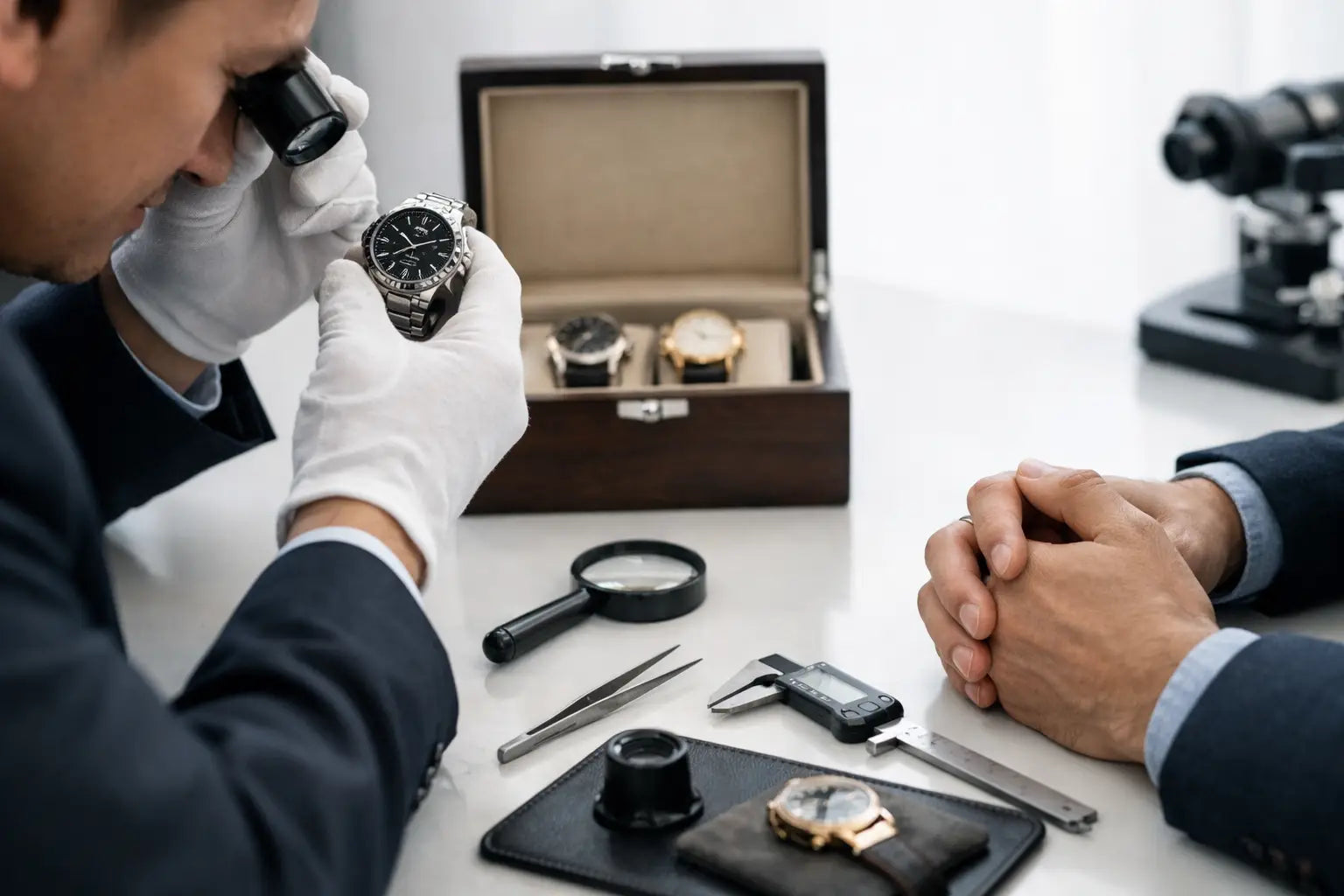
A watch can look immaculate on the wrist and still fall short under appraisal. A polished case, replaced dial, stretched bracelet or missing warranty card can shift value quickly, sometimes by hundreds and sometimes by thousands. That is why the watch appraisal process matters if you want a fair offer and a sale that completes without delays, disputes or last-minute renegotiation.
If you are selling a Rolex Submariner, Omega Speedmaster, Tudor Black Bay, a vintage Datejust or a niche enthusiast piece, the same principle applies. The market does not price watches on brand name alone. Buyers look at condition, originality, service history, completeness and current demand. A proper appraisal brings those factors together and turns uncertainty into a clear market-backed figure.
What the watch appraisal process is really measuring
At its simplest, a watch appraisal is an expert assessment of what your watch is worth in the current market. Not what it cost at retail, not what someone is asking for a similar piece online, and not the inflated figure sometimes used for insurance. For a seller, the useful number is the real saleable value based on what informed buyers are actually paying now.
That distinction matters. A dealer appraisal for an outright purchase will usually differ from an insurance valuation because the purpose is different. Insurance figures are often deliberately higher to reflect replacement cost. A sale appraisal is tied to live market conditions, the likely resale route and the level of work, risk and holding time involved for the buyer.
This is also why two offers from different channels can vary. An auction house, private marketplace and specialist buyer are working to different models. One may charge seller fees, another may expose you to buyer disputes, and another may make a direct offer for speed and certainty. The number only makes sense once you understand what sits behind it.
How the watch appraisal process usually starts
Most appraisals begin with the basics: brand, reference, age, condition and whether the watch comes with its box and papers. Clear photographs help, especially of the dial, case sides, caseback, clasp, bracelet stretch, movement if available, and any accessories. If the watch has known faults, it is better to state them early. Accuracy helps produce a realistic estimate from the start.
For modern luxury watches, the reference number is often the quickest way to anchor value. A Rolex GMT-Master II 126710BLRO sits in a very different market position from an older 16710, and both differ again depending on bracelet, year and set completeness. The same goes for Omega Speedmasters, where small details around bracelet code, dial layout and accompanying paperwork can change buyer confidence.
At this early stage, the appraisal is often provisional. It gives a sensible range based on the information supplied, but the final figure usually depends on physical inspection. That is standard. Photos can hide over-polishing, moisture damage, aftermarket parts or mechanical issues that only appear once the watch is handled properly.
Condition, originality and completeness
Condition is where many sellers overestimate value. A few hairlines from normal wear are not usually a problem, particularly on modern sports watches. Heavy case polishing, rounded lugs, deep bracelet stretch, chipped bezels, dial damage or moisture marks are different. These can have a direct effect on desirability and resale speed.
Originality is just as important, and in some cases more important than surface condition. A watch with its original dial, hands, bezel insert and bracelet can outperform a cleaner example with service replacements or aftermarket parts. Vintage watches are especially sensitive here. Collectors pay for honest originality, not cosmetic perfection at any cost.
Completeness also plays a part. Box and papers do not always transform value, but they can strengthen the offer, particularly for newer Rolex, Patek Philippe, Audemars Piguet and Omega models. Service records, spare links, swing tags, booklets and receipts all help build a cleaner picture of provenance. For inherited watches, missing paperwork is common and not a deal-breaker, but the more supporting material available, the easier the appraisal becomes.
What experts check during a physical appraisal
A proper in-person appraisal goes beyond a quick visual once-over. The case is examined for wear, polishing and signs of damage. The bracelet and clasp are checked for stretch, dents, replacement sections and correct finishing. The crystal, bezel, crown and pushers are inspected for function and originality.
Then comes the movement side. Timekeeping, power reserve, winding feel, rotor noise where relevant, chronograph function and date change can all indicate whether a service is likely. On certain brands and vintage references, movement serials and calibre details also matter for authentication and period correctness.
Authentication is not a box-ticking exercise. Luxury watches have become more sophisticated, and so have counterfeit parts. A credible appraisal process checks that the watch is not only genuine overall but also correctly configured. A genuine case with swapped components can still affect value sharply.
Market demand matters more than many sellers expect
A watch can be rare and still not be especially liquid. Equally, a common reference in strong demand may achieve a better result because it sells quickly and predictably. The appraisal process always has a commercial layer to it. Buyers are not just asking what a watch should be worth in theory. They are assessing what the market is prepared to pay now.
This is why prices move. Steel sports Rolex models, certain Cartier references, popular Tudors and specific Omega pieces can shift with surprising speed. Vintage watches can be even more variable because value often depends on fine details, collector sentiment and how many similar examples are available at any given time.
For sellers, this means timing can matter, but chasing the top of the market is rarely practical. A strong appraisal is less about finding an imaginary perfect number and more about securing a fair, defensible offer that reflects current demand and allows the sale to complete cleanly.
Why online asking prices can mislead you
Many owners start by checking listing platforms, then assume those figures represent true market value. They often do not. Asking prices are aspirational. Sold prices, dealer margins, platform fees, VAT position, service requirements and return risk all sit behind the final economics.
A watch listed at a headline figure online may sit unsold for weeks or months. Another may need a costly service before resale. Another may look complete until a buyer disputes the bracelet, dial or paperwork. A specialist appraisal accounts for those realities. It is not there to flatter the owner. It is there to tell you what the watch is likely to achieve in the real market.
Direct sale or consignment: why the route changes the figure
One of the biggest misunderstandings around appraisal is assuming there should be one universal number. There is not. The right value depends partly on how you want to sell.
If you want a direct sale, the offer reflects speed, convenience and certainty. You avoid marketplace fees, wasted time, viewings, no-shows and payment disputes, but the buyer needs room for resale margin and risk. If you choose consignment, the end sale price may be higher, but you wait longer and the proceeds depend on when the watch sells.
Neither route is automatically better. It depends on your priority. If you want cash quickly, perhaps to release funds from a collection or settle an estate, a direct purchase can be the smarter option. If the watch is unusual, high value or likely to benefit from patient marketing, consignment may produce more.
How to prepare for the best appraisal outcome
The best approach is simple: present the watch honestly and completely. Gather the box, warranty card, service paperwork, spare links and any purchase receipts. Wipe the watch clean, but do not attempt amateur polishing or repairs. Those can lower confidence rather than improve value.
Take clear, well-lit photographs and include close-ups of any flaws. If the watch is running poorly or has a known issue, say so. Transparent sellers usually get smoother offers because there is less chance of adjustment later.
It also helps to choose a buyer who understands more than just the obvious brands. Broad-market expertise matters when the watch falls outside the standard luxury shortlist, or when a vintage piece needs context rather than a rough guess.
What a good appraisal process should feel like
A strong appraisal should be clear, evidence-based and easy to follow. You should understand what is helping value, what is holding it back and whether the offer is for direct purchase or expected resale proceeds. There should be no vague language, hidden fees or pressure tactics.
For UK sellers, the practical side matters too. Insured handling, secure payment, clear identification checks and prompt turnaround are part of a professional process, not extras. If you are posting a watch or arranging a high-value handover, confidence in the transaction matters as much as the number itself.
At Watch Nest, that is exactly how the process is approached - expert valuation, straightforward communication and a sale route that fits your priorities rather than forcing you into one model.
The right appraisal does more than tell you what your watch is worth. It gives you enough clarity to act with confidence, whether you sell today, consign for a stronger return, or simply decide to wait for a better moment.