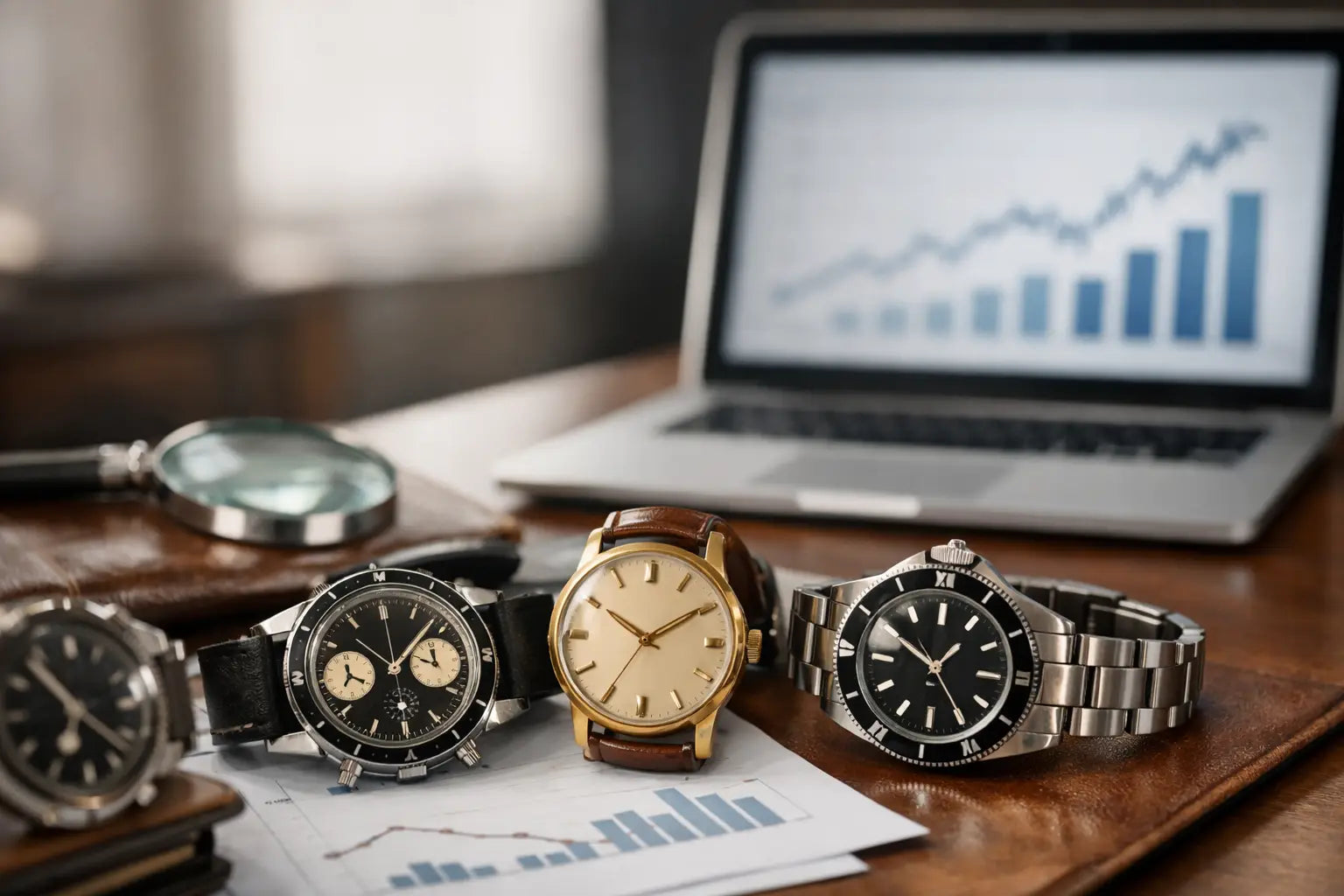
A gilt-dial sports Rolex with honest wear can now attract more serious buyers than a polished example with a fresh-looking case. That tells you almost everything about current vintage watch market trends. Buyers are not simply chasing age. They are paying for originality, credibility and confidence that a watch has not been over-restored, pieced together or priced on hype alone.
For anyone thinking about selling a vintage watch, this matters. The market is still active, but it is far more selective than it was during the broad run-up in pre-owned prices. Strong pieces still sell well. Average pieces, overpolished examples and watches with questionable histories take longer and often need sharper pricing. If you understand what buyers are rewarding, you are in a much better position to judge when to sell and what kind of offer is realistic.
What vintage watch market trends are showing now
The headline shift is simple. The market has moved away from blanket enthusiasm and towards quality discrimination. A few years ago, many vintage references rose together because demand for mechanical watches widened quickly. Today, buyers are more informed, and they are less willing to overlook problems.
That does not mean vintage demand has disappeared. Far from it. Desirable vintage Rolex, Omega, Heuer, Cartier, Tudor and Patek Philippe references still command strong money, particularly when they come with appealing dials, correct parts and a sensible ownership story. What has changed is the spread between the best and the rest. Two watches with the same reference number can now trade at meaningfully different levels depending on case condition, handset correctness, lume consistency and service history.
In practical terms, sellers should expect valuation to be more forensic. Brand alone is not enough. A vintage Submariner, Speedmaster or Datejust may still be highly saleable, but buyers will look much more closely at whether the bezel insert is period-correct, whether the dial has been refinished, and whether replacement parts have weakened collectability.
Originality is beating restoration
One of the clearest vintage watch market trends is the premium attached to originality. Collectors would usually rather buy a watch with light, honest ageing than one that has been made to look newer at the expense of its character.
This is especially true in categories where detail matters. Tropical dials, ghost bezels, creamy lume plots and sharp, unpolished chamfers can all lift value when they are genuine and attractive. By contrast, aggressive polishing, relumed dials, service hands that do not match and aftermarket parts can suppress it.
There is a trade-off here. Mechanical reliability still matters, and some sympathetic maintenance is sensible. A watch that does not run properly or has obvious movement issues will narrow the buyer pool. But from a value perspective, cosmetic intervention needs care. Replacing visible vintage components with later service parts may improve day-to-day usability while reducing collector appeal.
For sellers, this means paperwork and transparency are worth more than ever. If a watch has been serviced, say so. If parts have been changed, declare it. Serious buyers do not expect every 50-year-old watch to be untouched. They do expect an honest description and realistic pricing.
Sports models remain strong, but dress watches can surprise
Vintage sports watches still dominate demand. Rolex sports references, vintage Tudor divers, classic Omega Speedmasters and select Heuer chronographs continue to attract broad interest because they combine recognisable design, wearability and a well-established collector base.
That said, one of the more interesting shifts has been the renewed appeal of overlooked vintage dress watches. As top-tier sports models became expensive, some buyers started moving into sectors that offered stronger relative value. Classic pie-pan Omegas, vintage Cartier tanks, Calatrava-style pieces and elegant 1960s and 1970s dress references have all benefited from this change in attention.
This does not mean every dress watch is suddenly a major asset. Brand, case metal, dial design and size still matter. Many smaller dress watches remain niche, particularly if they are yellow gold-plated rather than solid gold, or if they come from brands with weaker secondary-market recognition. But there is now more appetite for quality than there was when almost all attention sat with steel sports pieces.
For inherited watches, this is particularly relevant. Families often assume the old gold dress watch is less important than the steel diver. Sometimes that is true. Sometimes it is not. A proper assessment can reveal collector interest where a generalist buyer might only see scrap or low trade value.
Provenance and completeness still influence price
Boxes and papers are not everything in vintage, but they can still make a difference. Original guarantee papers, sales receipts, service documents, period booklets and even correctly dated accessories can strengthen a watch’s market position. They help support authenticity and make the watch easier to place with a confident buyer.
Provenance matters even more when the watch itself is unusual. Military-issued examples, rare dial variants, retailer-signed pieces and watches linked to notable ownership histories need credible documentation if they are to achieve their full value. Without that support, buyers may discount heavily to cover uncertainty.
The same applies to collection sales. When several watches come from the same owner and are accompanied by service records or purchase receipts, it becomes easier to present the group as genuine and well-kept. That can improve liquidity and reduce the friction often seen with estate disposals.
Brand hierarchy is still real
Not all vintage brands move in the same way. Rolex remains the deepest market because the buyer base is broad and international. Good vintage Rolex can still sell quickly when price and condition are aligned. Omega also performs well, though the market is more reference-specific. A strong vintage Speedmaster will attract different demand from a common Seamaster with refinished dial.
Patek Philippe and Audemars Piguet sit in a different category again. These are less about mass demand and more about exact reference, originality and buyer confidence. Values can be high, but the audience is narrower and expectations are stricter.
Tudor has held up well because collectors increasingly appreciate the brand’s historical links, especially in Submariner and chronograph references. Heuer remains desirable where motorsport heritage and correct execution are present. Cartier has gained momentum with both collectors and style-led buyers, though condition and case integrity are critical.
Then there are the sleepers. Universal Genève, Zenith, Longines and select military watches can perform strongly in the right specification. But they often need a specialist appraisal. A broad statement like “vintage watches are up” is too crude to be useful. Reference-level knowledge is what determines saleability.
The UK seller’s market is shaped by confidence and speed
For UK sellers, the practical trend is that buyers want lower risk and quicker certainty. Private marketplaces can still produce headline prices, but they also come with delays, fee leakage, time-wasters and post-sale disputes. That matters more in vintage, where condition debates and authenticity questions are common.
As a result, many owners are choosing specialist buyers or consignment routes depending on their priorities. If speed, security and a clean transaction matter most, a direct sale is usually the right answer. If the watch is especially rare and there is time to wait for the ideal end buyer, consignment may produce a stronger gross figure. It depends on the watch, the urgency of the sale and how much uncertainty you are willing to tolerate.
This is where commercial realism matters. A direct purchase offer will reflect resale margin, market risk and time to turn stock. That is normal. What matters is whether the offer is informed by current trading levels, not outdated peak prices or wishful online listings.
How sellers should read the market before accepting an offer
If you are planning to sell, focus on the factors buyers are actually paying for. Original dial, case shape, correct components, movement condition and documented service work are usually more important than a polished presentation. Avoid cleaning or refurbishing the watch without advice. A well-meaning intervention can easily damage value.
It also helps to be realistic about timing. The strongest offers tend to appear where the watch fits an active collector segment and can be sold with confidence. If your watch is common, heavily restored or difficult to place, expectations should adjust accordingly. That is not a sign the market is broken. It simply reflects how selective buyers have become.
For higher-value vintage pieces, specialist appraisal is essential. A proper buyer will look beyond brand and age, assess originality in detail and explain where the value sits. That is particularly important with inherited watches, military pieces, tropical dials and references that have multiple dial or bezel variants.
At Watch Nest, we see this every day across vintage Rolex, Omega, Tudor and more obscure enthusiast pieces. The watches that perform best are not always the flashiest. They are the ones that buyers can trust.
The market is still there for good vintage watches, but it rewards evidence, condition and honesty far more than noise. If you approach a sale with that in mind, you are far more likely to get a fair result without wasting time chasing prices the market no longer supports.